

6 Wet Kitchen Design Ideas for Modern Malaysian Homes

For many Malaysian households, cooking is a daily activity that places significant demands on the kitchen. From stir-frying and deep-frying to preparing multiple dishes for family gatherings, the kitchen is regularly exposed to heat, moisture, grease, and heavy daily use. That’s why a kitchen needs to be designed with functionality and durability in mind, not just aesthetics.
A well-planned wet kitchen helps keep cooking activities organized while making cleaning and maintenance easier. With the right layout, materials, and storage solutions, you can create a space that supports your cooking habits and remains practical for years to come. Here are six wet kitchen design ideas for modern Malaysian homes.
Key Takeaways
- A wet kitchen is designed for heavy cooking activities and is built to withstand heat, moisture, grease, and frequent daily use.
- The main difference between a wet kitchen and a dry kitchen is that a wet kitchen prioritises functionality and durability, while a dry kitchen focuses on aesthetics and entertaining.
- Essential wet kitchen features include durable cabinets, sufficient countertop space, proper ventilation, smart storage solutions, and easy-to-clean surfaces.
- Effective wet kitchen design ideas include separating cooking and washing zones, maximising vertical storage, incorporating pull-out storage systems, and choosing a practical kitchen layout.
- Durable materials such as ACE Ultra Ply + HVEA, quartz stone, and sintered stone can help improve the longevity and maintenance of your kitchen.
- Regular cleaning, proper ventilation, and prompt maintenance help keep a wet kitchen safe, hygienic, and functional for years to come.
- A well-planned wet kitchen design can improve cooking efficiency, simplify maintenance, and enhance the overall value of your home.
What Is a Wet Kitchen?
A wet kitchen is a dedicated cooking area designed for heavy-duty food preparation and cooking activities. Unlike decorative or entertainment-focused kitchen spaces, a wet kitchen is built to withstand regular exposure to heat, water, steam, grease, and cooking odours.
In many Malaysian homes, the wet kitchen serves as the primary cooking area where daily meals are prepared. Activities such as stir-frying, deep-frying, boiling, steaming, and washing ingredients are typically carried out in this space.
Because of the demanding nature of Malaysian cooking, a wet kitchen often features durable countertops, practical storage solutions, a cooker hood, and materials that can withstand moisture and frequent cleaning.
The idea of a wet kitchen is simply to provide a functional and efficient space where cooking can take place without affecting the cleanliness and comfort of the rest of the home.
Wet Kitchen vs Dry Kitchen: What Is the Difference?
Many modern Malaysian homes feature both a wet kitchen and a dry kitchen. While they are connected, each space serves a different purpose.
A wet kitchen is designed for heavy cooking activities. It is where homeowners prepare ingredients, cook meals, wash dishes, and handle tasks that generate heat, smoke, grease, and moisture.
A dry kitchen, on the other hand, is typically used for lighter activities such as preparing drinks, serving food, storing small appliances, or entertaining guests. Since dry kitchens are exposed to less moisture and grease, homeowners often place greater emphasis on aesthetics and decorative finishes.
Having separate wet and dry kitchens allows homeowners to enjoy the best of both worlds. The wet kitchen remains highly functional for everyday cooking, while the dry kitchen provides a clean and welcoming space for socialising and family gatherings.
| Feature | Wet Kitchen | Dry Kitchen |
| Primary Purpose | Heavy cooking and food preparation | Light food preparation and entertaining |
| Design Priority | Functionality, durability, and easy maintenance | Aesthetics, presentation, and social interaction |
| Maintenance Requirements | More frequent cleaning due to cooking activities | Generally easier to maintain |
What Should Be Included in a Wet Kitchen?
1. Durable Kitchen Cabinets
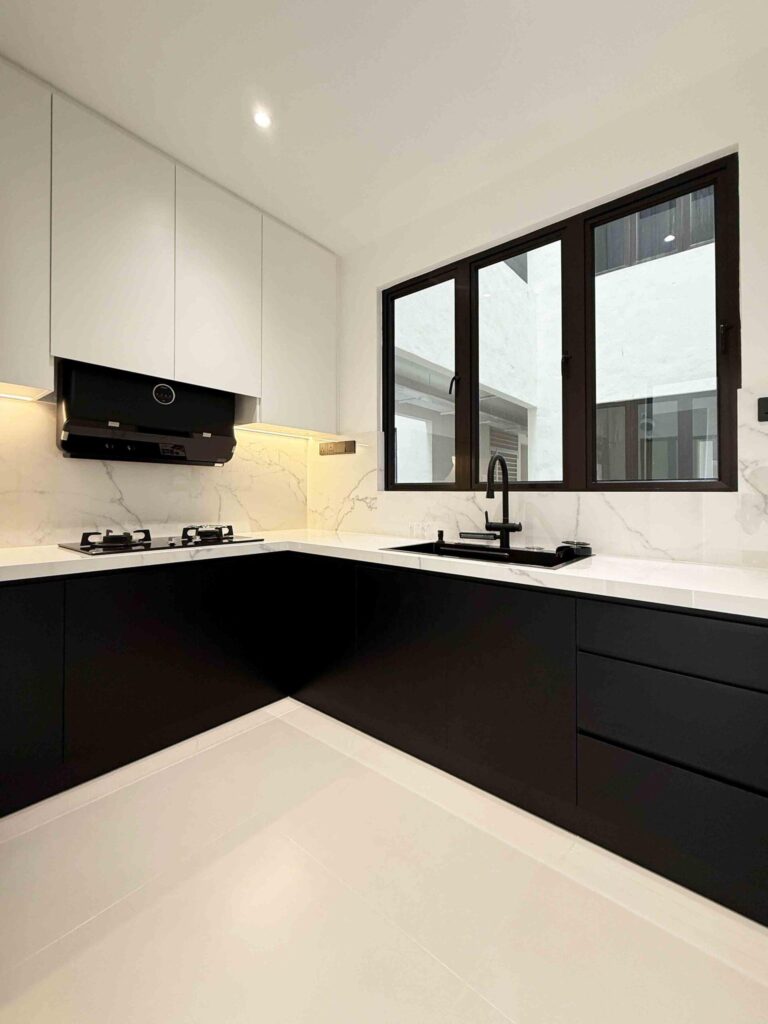
Kitchen cabinets in a wet kitchen should be able to withstand moisture, temperature changes, and daily use. Choosing the right cabinet materials helps prevent issues such as warping, swelling, or premature wear.
2. Sufficient Countertop Space
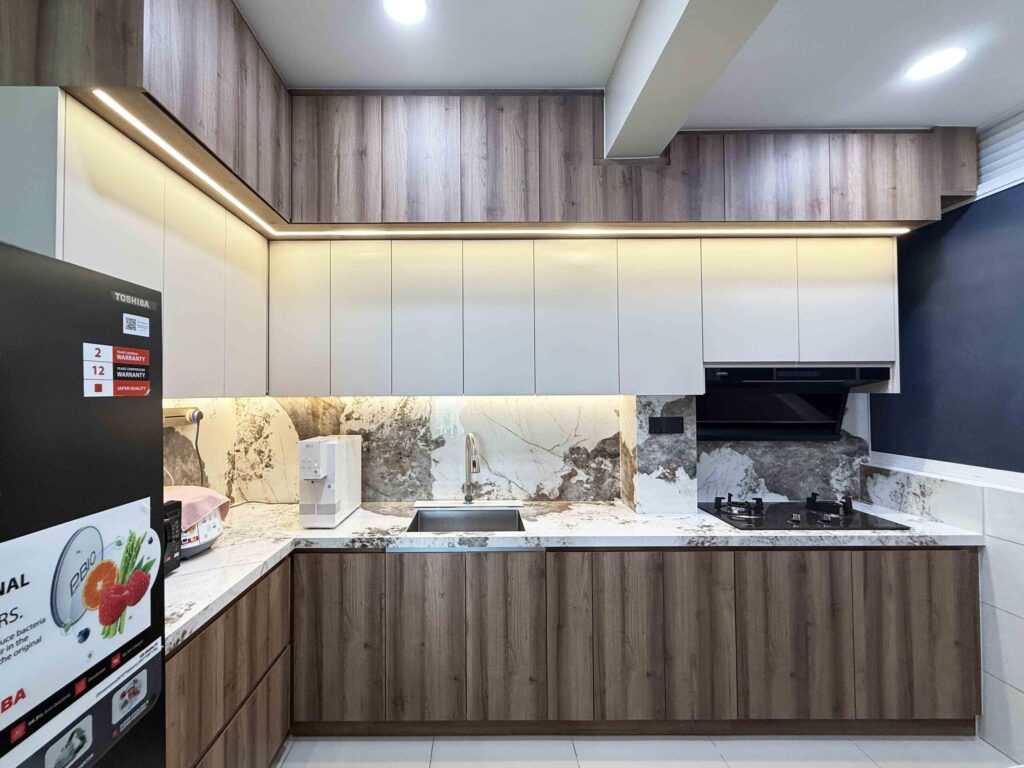
Adequate countertop space makes food preparation more efficient and reduces clutter. Homeowners should ensure there is enough room for preparing ingredients, placing appliances, and serving food when needed.
3. Proper Ventilation
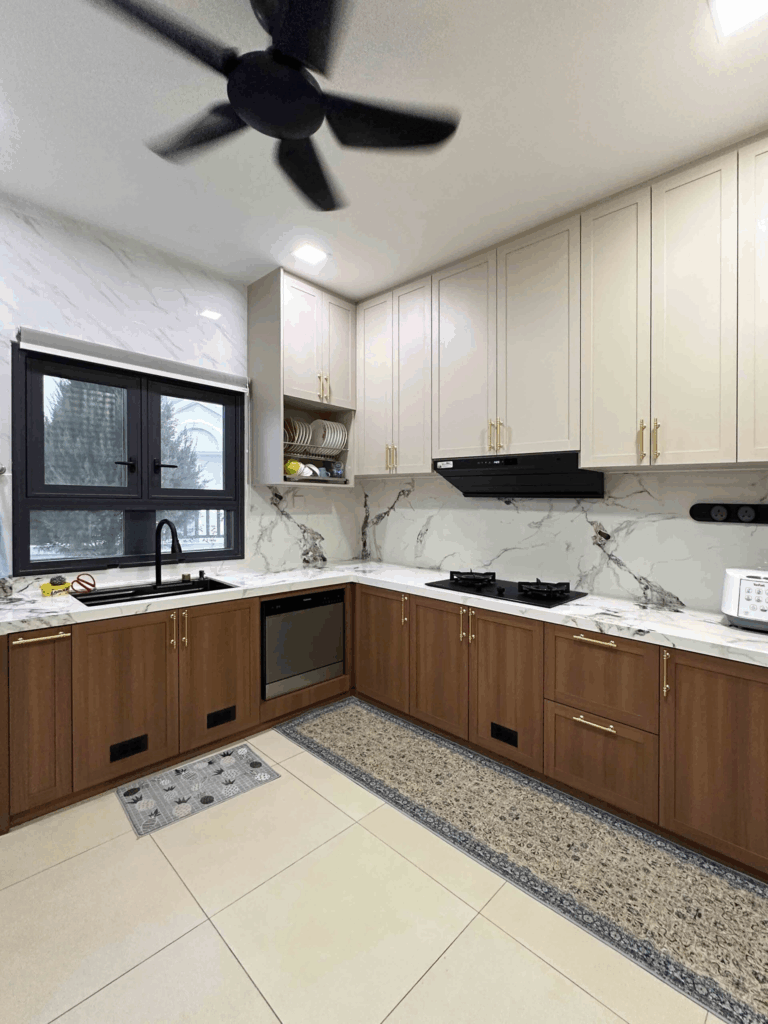
A reliable cooker hood or ventilation system helps remove smoke, grease particles, and cooking odours. Proper airflow not only creates a more comfortable cooking environment but also helps protect cabinets and walls from grease buildup.
4. Functional Storage Solutions
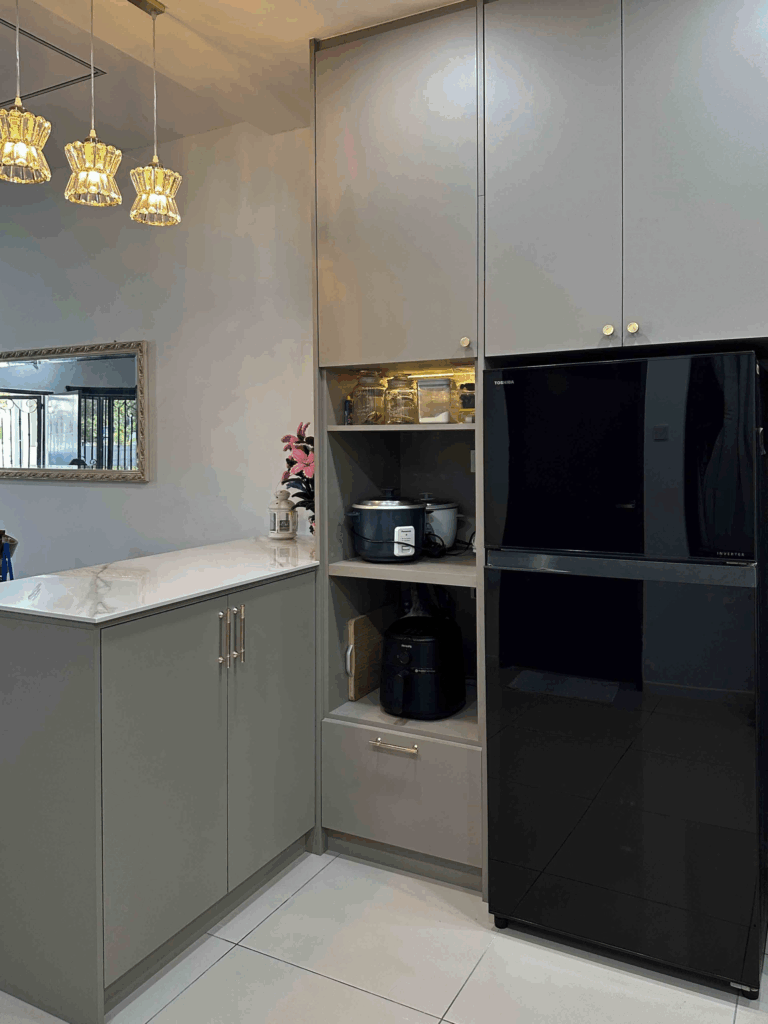
Storage is essential in any kitchen. Features such as deep drawers, pull-out pantry cabinets, and corner storage systems help maximise space while keeping cooking essentials organised.
5. Easy-to-Clean Surfaces
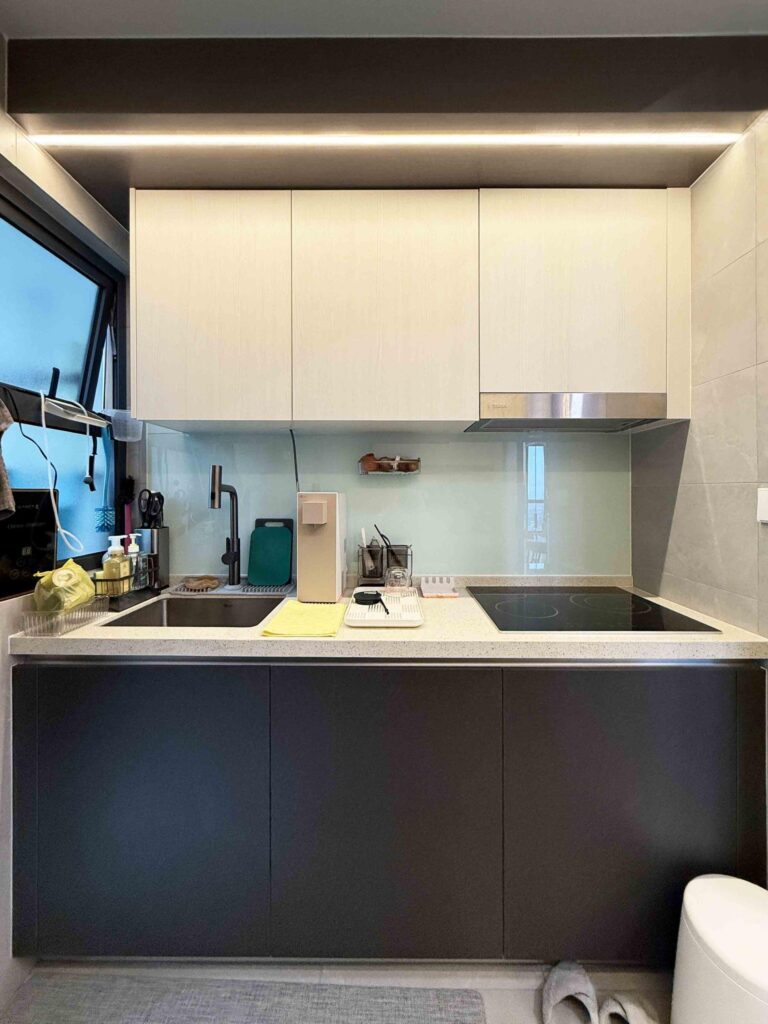
From countertops to backsplashes, choosing surfaces that are easy to clean can significantly reduce daily maintenance, especially in kitchens that experience frequent cooking activity.
Look for materials with smooth, non-porous surfaces that resist stains, grease absorption, and moisture penetration. These characteristics make it easier to wipe away food splatters, oil residue, and spills before they become difficult to remove. Easy-to-clean surfaces not only save time and effort but also help maintain a cleaner and more hygienic kitchen environment over the long term.
6 Practical Wet Kitchen Design Ideas for Malaysian Homes
1. Separate Cooking and Washing Areas
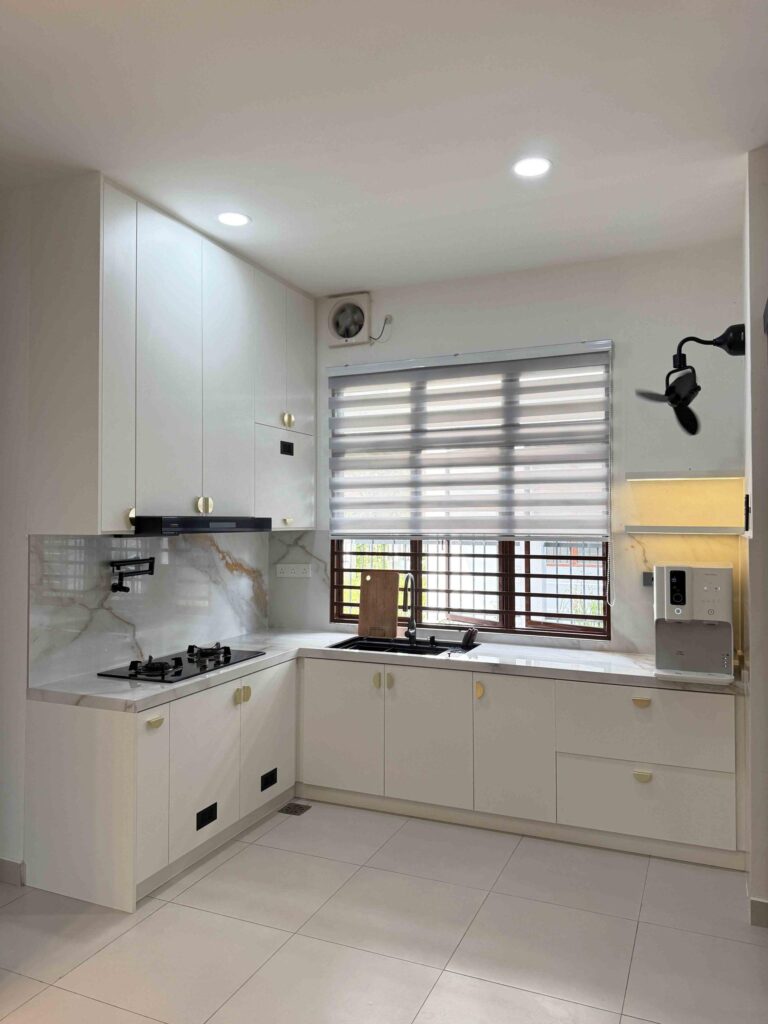
One of the simplest ways to improve kitchen efficiency is by separating the cooking and washing zones. Placing the hob and cooker hood away from the sink helps create a smoother workflow, especially when multiple people are using the kitchen at the same time.
This layout also helps reduce water splashes near cooking appliances and provides dedicated spaces for food preparation, cooking, and cleaning.
2. Maximise Vertical Storage
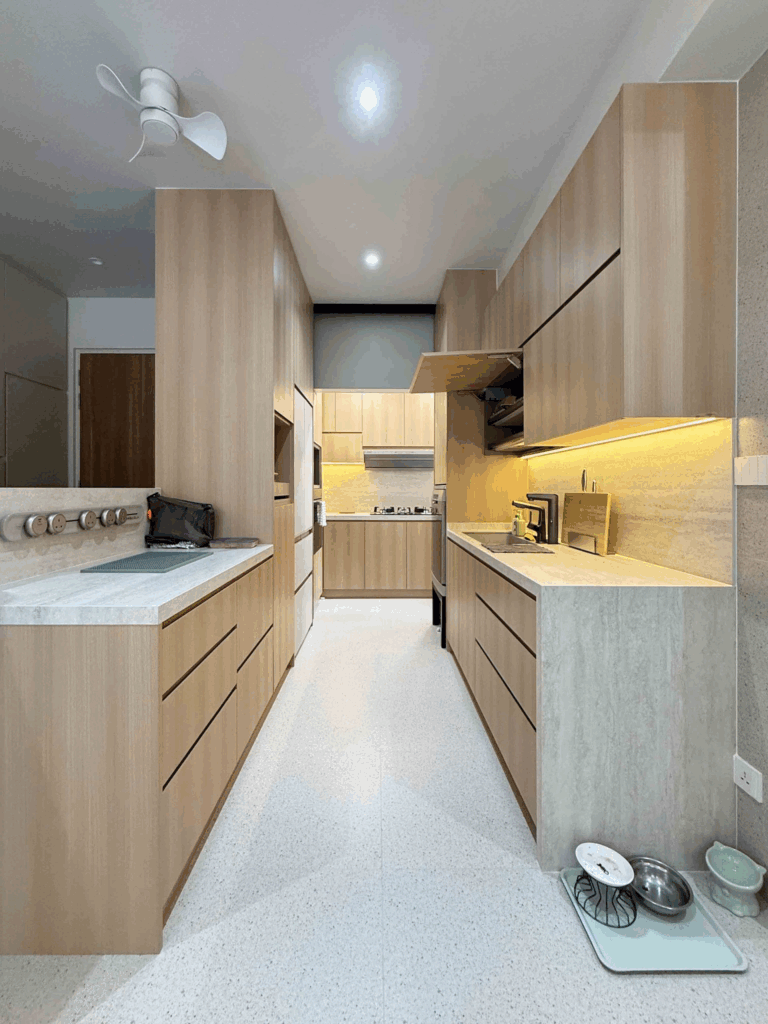
Kitchen space is valuable, especially in condominiums and modern homes where every square foot counts. Instead of relying solely on base cabinets, consider extending storage upwards with tall cabinets or ceiling-height units.
Vertical storage helps maximise available space while providing room for pantry items, cookware, and rarely used kitchen essentials. It also reduces countertop clutter and creates a cleaner overall appearance.
3. Incorporate Pull-Out Storage Solutions
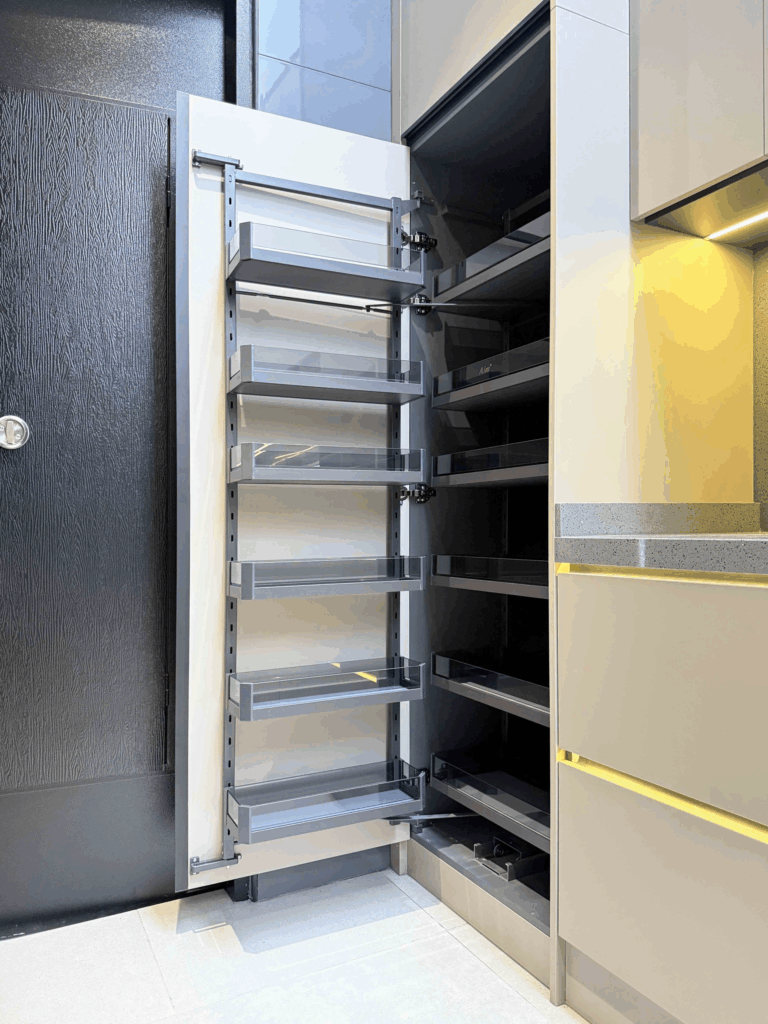
Traditional cabinets can sometimes make it difficult to access items stored at the back. Pull-out baskets, drawer systems, and corner storage solutions improve accessibility and make everyday cooking more convenient.
These storage features help keep ingredients, utensils, and cookware organised while making better use of available cabinet space.
4. Prioritise Ventilation
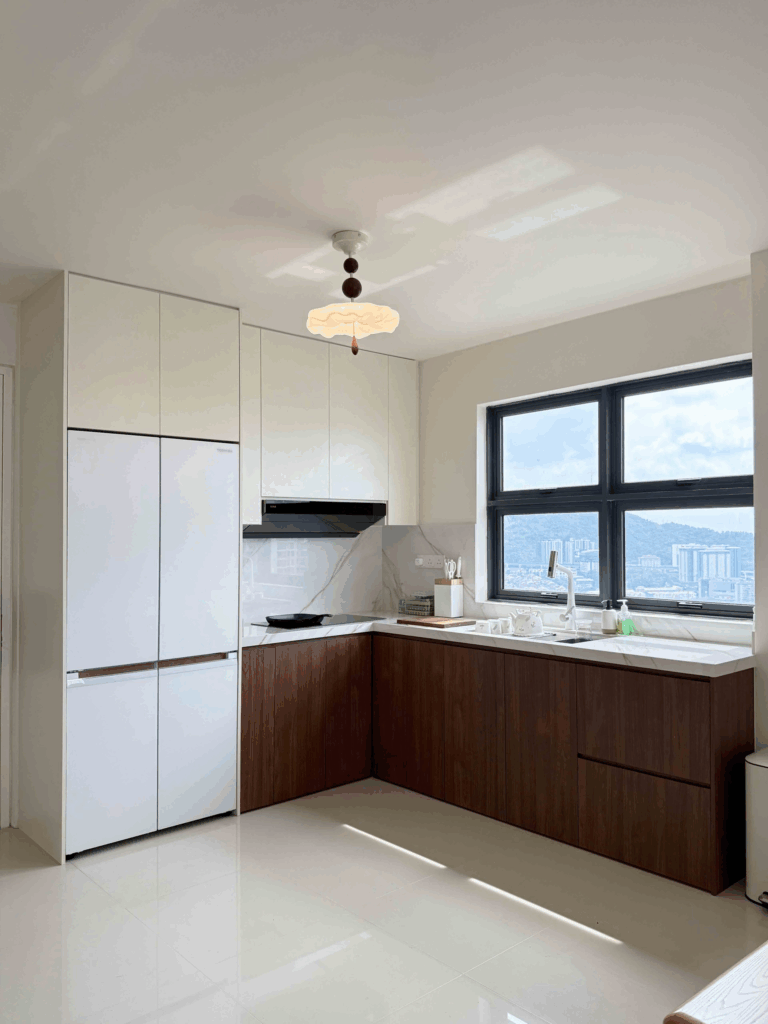
Malaysian cooking often produces smoke, steam, grease, and strong aromas. Without proper ventilation, these elements can accumulate on cabinets, walls, and ceilings over time.
A high-quality cooker hood is an essential component of any wet kitchen design. Effective ventilation helps improve air quality, minimise grease buildup, and create a more comfortable cooking environment.
5. Choose a Practical Kitchen Layout
Popular wet kitchen layouts include:
- L-Shaped Layout
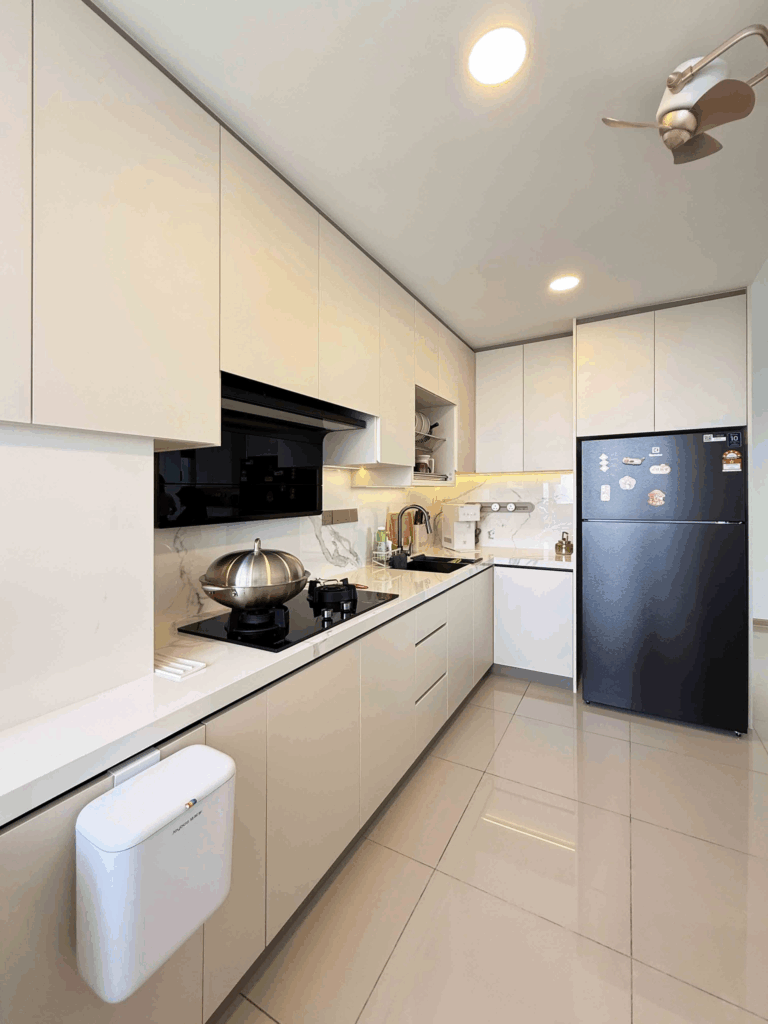
Suitable for small to medium-sized kitchens and provides efficient workflow.
- U-Shaped Layout
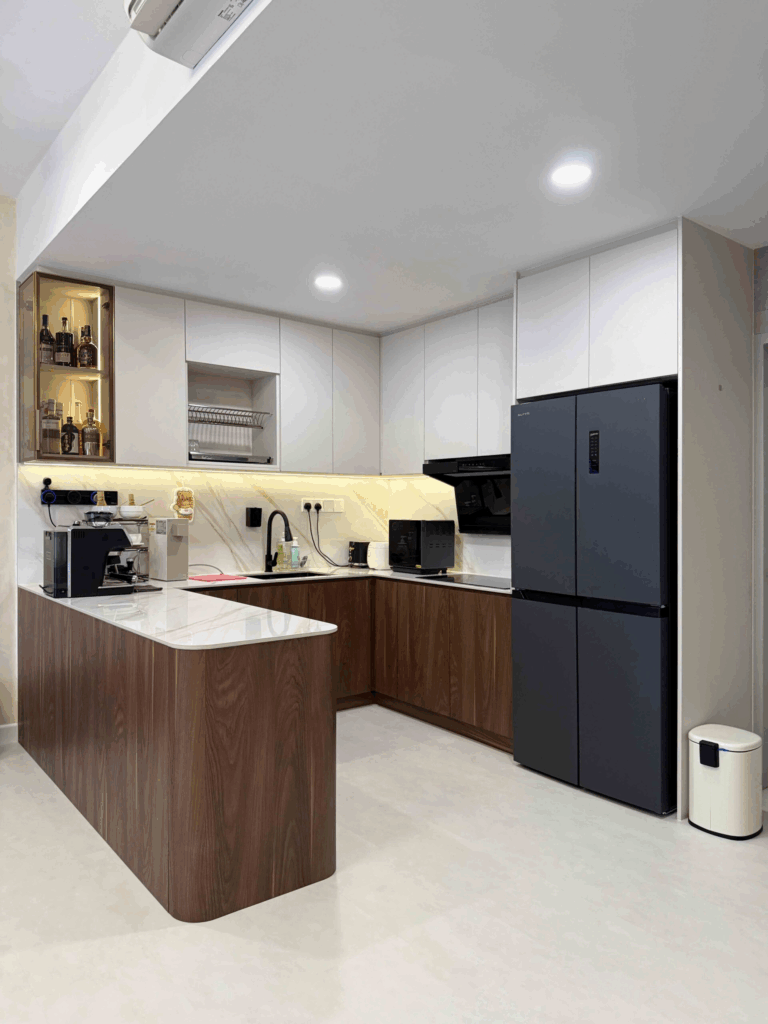
Offers more countertop and storage space for homeowners who cook frequently.
- Galley Layout
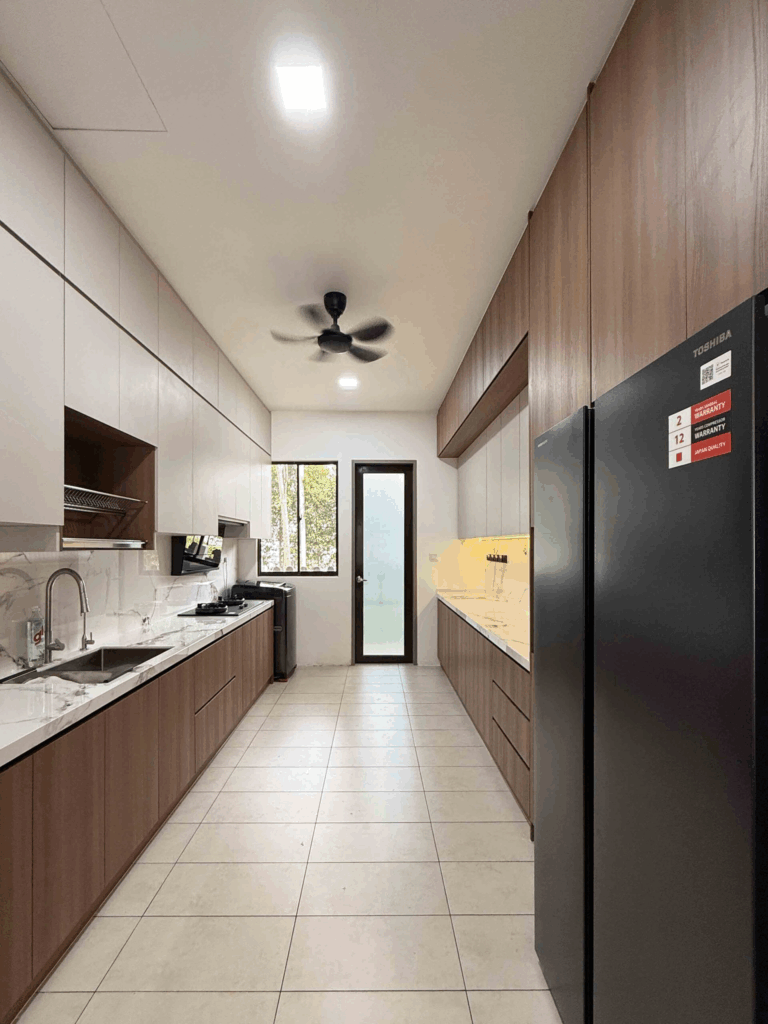
Ideal for compact homes where space efficiency is a priority.
Choosing the right layout can significantly improve functionality and movement within the kitchen.
6. Combine Durability with Modern Design
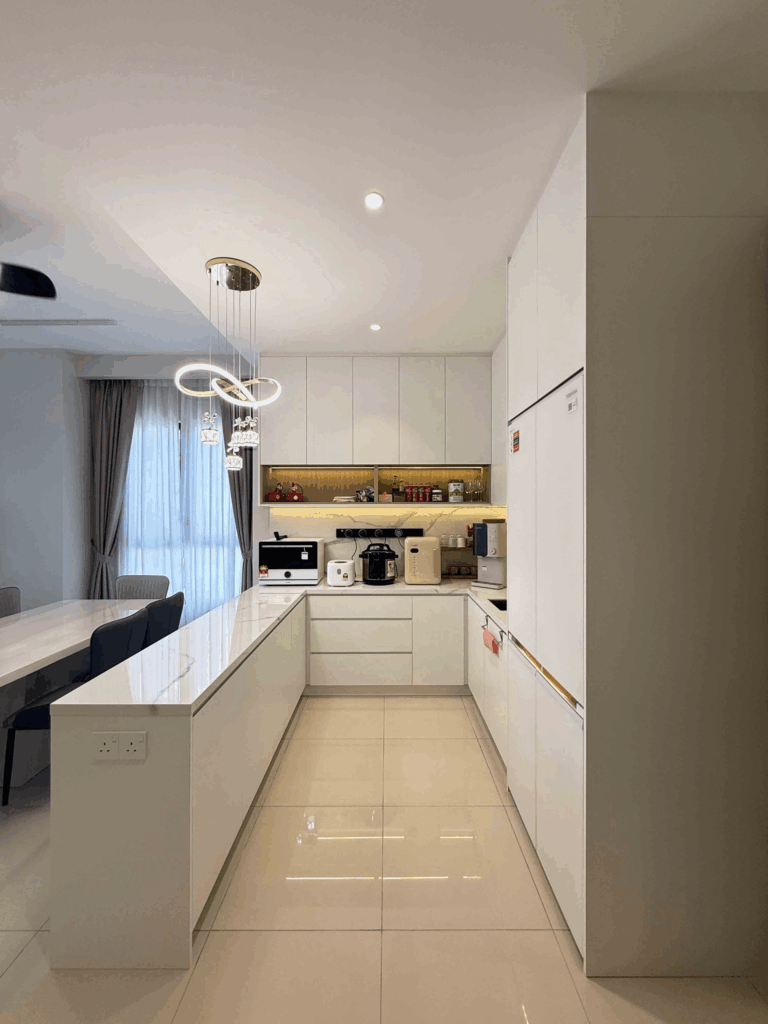
A practical wet kitchen doesn’t have to sacrifice aesthetics. Modern homeowners increasingly seek kitchens that are both durable and visually appealing.
By combining moisture-resistant cabinetry, durable countertops, quality hardware, and thoughtful colour selections, textures, and patterns, you can create a kitchen that performs well while complementing the overall design of your home.
Best Materials for Wet Kitchen Cabinets, Countertops and Backsplash
Cabinets
For kitchen cabinets, durability and moisture resistance should be top priorities, especially in wet kitchens where exposure to heat, steam, and water is part of daily use.
At ACE Cabinet Design, our ACE Ultra Ply + HVEA cabinet system is specially developed to provide enhanced durability, moisture resistance, and long-term performance for Malaysian homes. In addition to its practical benefits, it is available in a wide range of colours and designs, allowing homeowners to achieve a stylish and modern kitchen without compromising on functionality.
These materials offer improved performance in humid kitchen environments and are better equipped to withstand everyday wear and tear. However, ACE Ultra Ply + HVEA is a proprietary cabinet solution available only at ACE Cabinet Design, making it a unique option for homeowners seeking both durability and aesthetic appeal in their wet kitchen. If you’re comparing cabinet materials and want to understand what contributes to a durable and visually appealing kitchen cabinet, read our guide, “Recommended Material for Kitchen Cabinet: ACE Ultra Ply or ACE Ultra Ply + HVEA?”
Countertops
Countertops are one of the most heavily used surfaces in any kitchen, so selecting the right material is essential for both functionality and long-term maintenance.
At ACE Cabinet Design, quartz stone and sintered stone are popular countertop options among homeowners due to their durability, stain resistance, and easy upkeep.
Quartz Stone
- Non-porous surface
- Stain resistant
- Easy maintenance
- Consistent appearance
Sintered Stone
- Heat resistant
- Scratch resistant
- Highly durable
- Modern aesthetic appeal
Both materials are well-suited for Malaysian kitchens, as their non-porous surfaces make them easy to wipe clean after cooking while maintaining their appearance over time.
Backsplash
A backsplash protects walls from water splashes, grease, and food stains while contributing to the kitchen’s overall appearance.
Many of the materials used for countertops, such as quartz stone and sintered stone, can also be used as backsplash options to create a seamless and cohesive kitchen design. Pairing your countertop with the right backsplash material can further reduce cleaning effort and help keep your kitchen looking its best. If you’re unsure which backsplash is right for your kitchen, check out our guide, “Kitchen Backsplash: Types, Materials, and How to Choose”.
Wet Kitchen Safety and Maintenance Tips
- Clean Grease Buildup Regularly
Grease can accumulate on countertops, cabinets, backsplashes, and cooker hoods over time. Regular cleaning helps maintain hygiene and preserves the appearance of kitchen surfaces.
- Maintain Your Cooker Hood
The cooker hood plays an important role in controlling smoke and grease. Cleaning filters according to the manufacturer’s recommendations helps maintain optimal performance.
- Address Water Leaks Promptly
Small leaks can cause significant damage if left untreated. Regularly inspect sink connections, water pipes, and cabinet interiors for signs of moisture.
- Keep Walkways Clear
A clutter-free kitchen improves safety and makes cooking more enjoyable. Ensure frequently used items are stored appropriately and avoid leaving objects on the floor.
- Follow Material-Specific Care Guidelines
Different materials require different cleaning methods. Using the recommended cleaning products can help preserve countertops, cabinetry, and backsplash surfaces for longer.
How ACE Cabinet Design Helps You Build a Practical Wet Kitchen
At ACE Cabinet Design, we understand that every homeowner has unique cooking habits, storage needs, and design preferences. That’s why we focus on creating customised kitchen solutions that balance functionality, durability, and aesthetics.
Our team works closely with homeowners to design kitchens that maximise available space while incorporating practical features such as smart storage solutions, durable cabinet materials, and efficient layouts. To help you get started, we also provide free consultation and free onsite measurement services, allowing us to better understand your space and requirements before recommending suitable solutions.
Whether you’re planning a complete kitchen renovation or upgrading selected components, we help you choose materials and designs that suit your lifestyle and long-term needs.
From concept planning to installation, our goal is to create kitchens that remain practical, beautiful, and comfortable to use for years to come.
Conclusion
Designing a wet kitchen is about creating a space that works seamlessly with your lifestyle and cooking habits. While every home has different requirements, the most successful wet kitchens share the same foundations, which are practical layouts, durable materials, efficient storage, and thoughtful planning.
By investing in the right design choices from the beginning, homeowners can avoid common issues such as clutter, difficult maintenance, and premature wear. More importantly, a well-designed wet kitchen can make daily cooking more enjoyable while supporting the long-term functionality of your home.
Whether you’re renovating an existing kitchen or planning a new one, taking the time to prioritise both performance and aesthetics will help you create a kitchen that continues to serve your family well for years to come.
Build Your Ideal Wet Kitchen with ACE Cabinet Design!

If you’re considering a wet kitchen renovation or designing a new kitchen from scratch, the right planning and material selection can help you create a space that remains functional, organised, and visually appealing for years to come. At ACE Cabinet Design, we’re committed to helping homeowners find solutions that suit their needs, lifestyle, and budget.
For a more personalised experience, you are welcome to Contact ACE Cabinet Design today to schedule a free consultation or visit our showrooms.
🔗 Explore more of our designs and services at acecabinetdesign.com.my
FAQs
What is the difference between a wet kitchen and a dry kitchen?
A wet kitchen is designed for heavy cooking activities such as frying, boiling, steaming, and food preparation, while a dry kitchen is typically used for lighter tasks, serving food, and entertaining guests.
Is a wet kitchen necessary for Malaysian homes?
While not essential, a wet kitchen is highly practical for Malaysian households because local cooking methods often involve high heat, oil, steam, and strong food aromas that are better contained in a dedicated cooking area.
What should be included in a wet kitchen?
A functional wet kitchen should include durable kitchen cabinets, sufficient countertop space, proper ventilation, practical storage solutions, and easy-to-clean surfaces that can withstand daily cooking demands.
What is the best layout for a wet kitchen?
The best layout depends on the available space and cooking habits. L-shaped layouts work well for smaller kitchens, U-shaped layouts offer more workspace and storage, while galley layouts are ideal for compact homes.
What materials are best for wet kitchen cabinets and countertops?
For cabinets, moisture-resistant options such as ACE Ultra Ply + HVEA, moisture-resistant plywood, and aluminium are popular choices. For countertops, quartz stone and sintered stone are commonly recommended due to their durability and ease of maintenance.
How can I make my wet kitchen easier to maintain?
Regularly cleaning grease buildup, maintaining your cooker hood, fixing water leaks promptly, and choosing durable, easy-to-clean materials can help keep your wet kitchen hygienic and functional for years.


