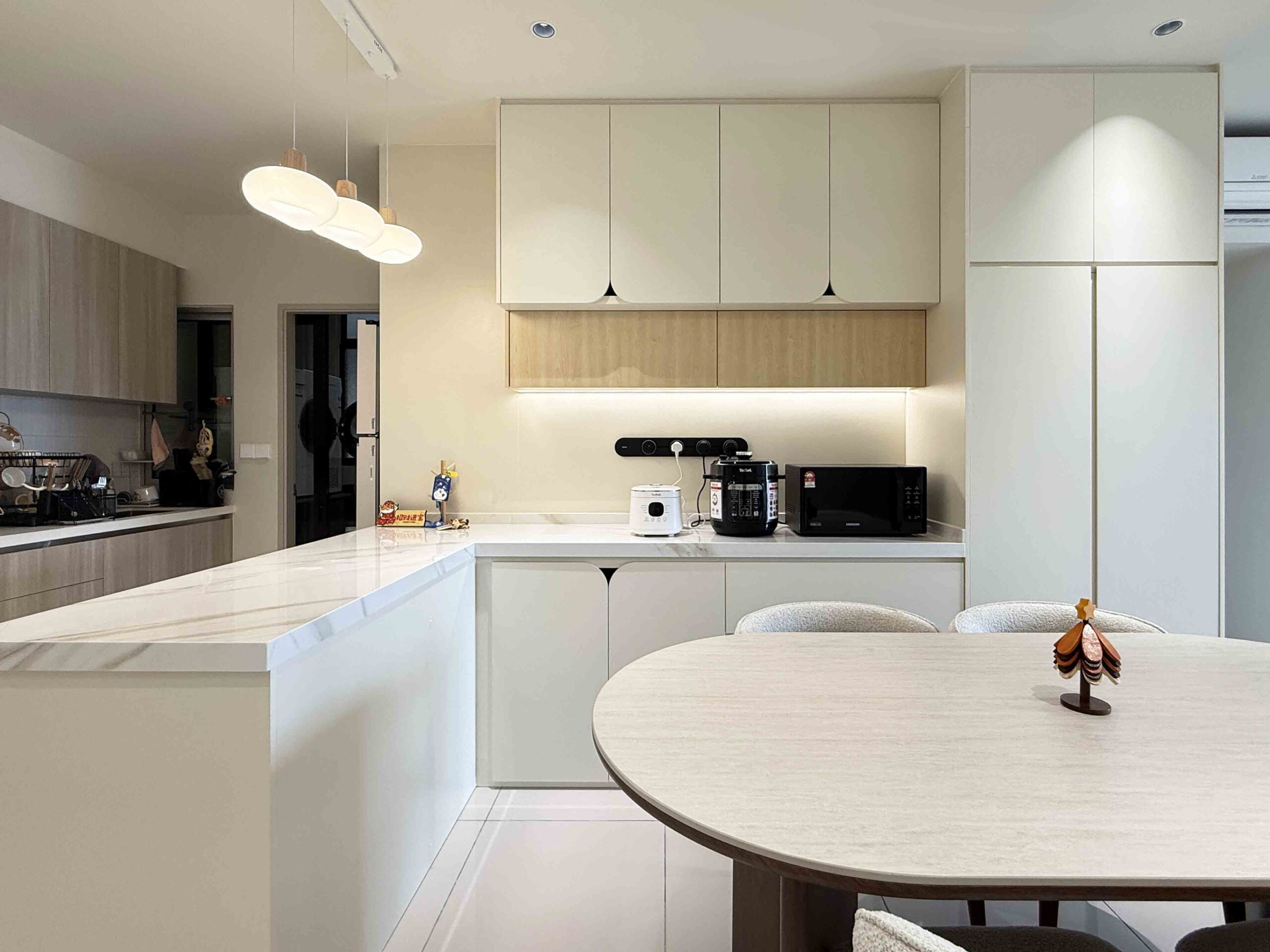
6 Dry Kitchen Design Ideas for Stylish Malaysian Homes
As modern Malaysian homes continue to evolve, kitchens are no longer viewed solely as spaces for cooking. Today, many homeowners are looking for kitchens that can also serve as a place to gather, entertain, and showcase their personal style. This is where the concept of a dry kitchen comes in.
Unlike a wet kitchen that is designed for heavy cooking, a dry kitchen focuses on convenience, aesthetics, and social interaction. It is often the first kitchen space guests see, making it an important part of the home’s overall design.
Whether you’re planning a new home or renovating an existing kitchen, a well-designed dry kitchen can enhance both the functionality and visual appeal of your living space. In this article, we’ll explore what a dry kitchen is, what features it should include, and six practical dry kitchen design ideas for stylish Malaysian homes.
Key Takeaways
- A dry kitchen is designed for light food preparation, serving, dining, and entertaining.
- The main difference between a dry kitchen and a wet kitchen is that dry kitchens prioritise aesthetics and social interaction, while wet kitchens focus on heavy cooking activities.
- Essential dry kitchen features include stylish cabinetry, functional storage, sufficient countertop space, and integrated appliances.
- Popular dry kitchen design ideas include kitchen islands, hidden storage, display cabinets, and open-concept layouts.
- Avoiding common design mistakes can help improve functionality and maintain a clutter-free appearance.
What Is a Dry Kitchen?
A dry kitchen is a kitchen space designed primarily for light food preparation, serving meals, entertaining guests, and everyday family interaction. Since heavy cooking activities are usually carried out in the wet kitchen, the dry kitchen can focus more on aesthetics, comfort, and organisation.
In many Malaysian homes, the dry kitchen acts as an extension of the dining or living area. It often features premium finishes, stylish cabinetry, display shelving, and integrated appliances that contribute to a clean and welcoming appearance.
Common activities in a dry kitchen include:
- Making coffee or tea
- Preparing simple meals
- Serving food
- Storing small appliances
- Entertaining family and guests
- Casual dining
Dry Kitchen vs Wet Kitchen: What Is the Difference?
| Feature | Dry Kitchen | Wet Kitchen |
| Primary Purpose | Serving, entertaining, light food preparation | Heavy cooking and food preparation |
| Cooking Activities | Minimal | Frequent and intensive |
| Exposure to Heat & Moisture | Low | High |
| Exposure to Grease & Odours | Minimal | High |
| Design Priority | Aesthetics and organisation | Functionality and durability |
| Common Features | Kitchen island, display cabinets, integrated appliances | Cooker hood, sink, durable work surfaces |
| Maintenance Requirements | Generally easier to maintain | Requires more frequent cleaning |
Having both spaces allows homeowners to separate heavy cooking activities from social and entertainment areas, creating a more comfortable and organised home environment.
What Should Be Included in a Dry Kitchen?
1. Stylish Kitchen Cabinets
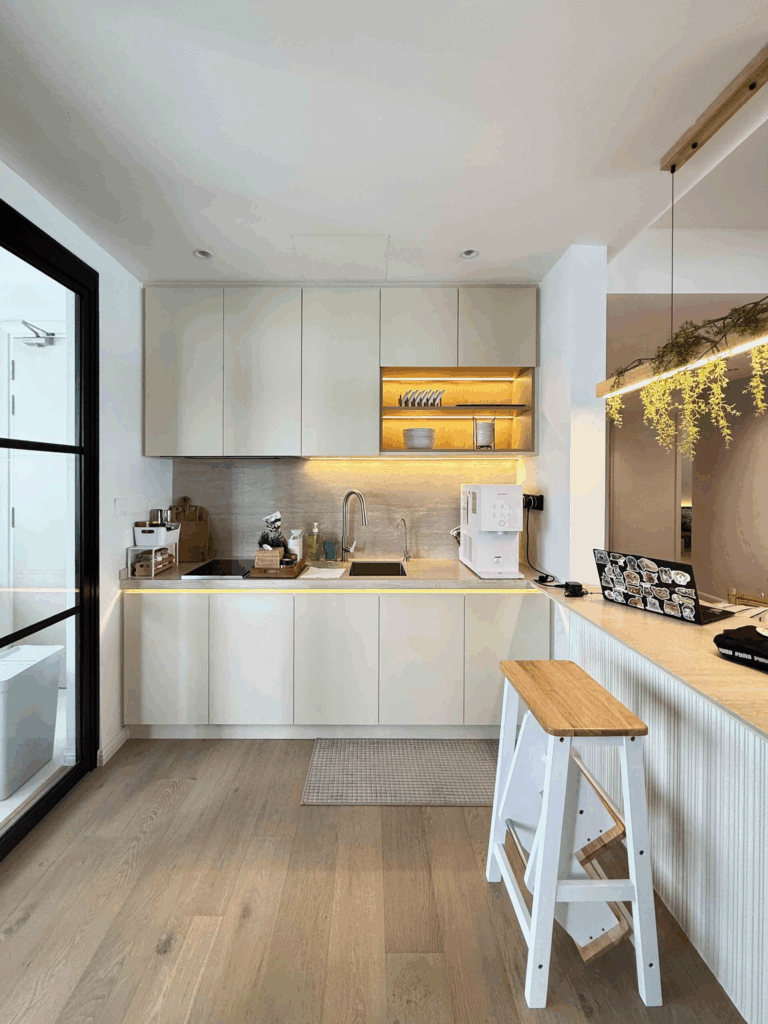
Cabinetry plays a major role in the overall appearance of a dry kitchen. Beyond storage, cabinets help define the design style of the space.
At ACE Cabinet Design, our ACE Ultra Ply + HVEA kitchen cabinets are designed to provide both durability and aesthetic flexibility. Available in a wide range of finishes and designs, they allow homeowners to create a stylish kitchen while enjoying materials built for long-term performance. If you’re comparing cabinet materials and want to understand what contributes to a durable and visually appealing kitchen cabinet, read our guide, “Recommended Material for Kitchen Cabinet: ACE Ultra Ply or ACE Ultra Ply + HVEA?”
2. Sufficient Countertop Space
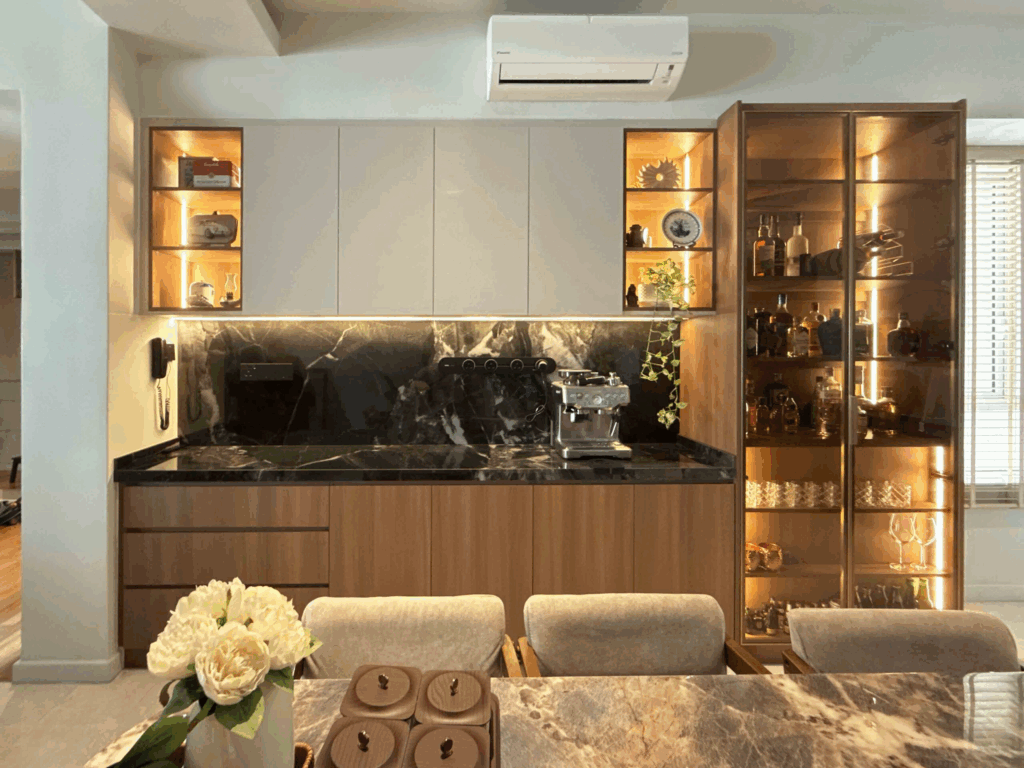
Countertops are essential for preparing drinks, serving food, displaying decorative items, and accommodating small appliances.
A well-planned countertop area helps maintain an organised and clutter-free kitchen while providing practical workspace for daily activities.
3. Functional Storage Solutions
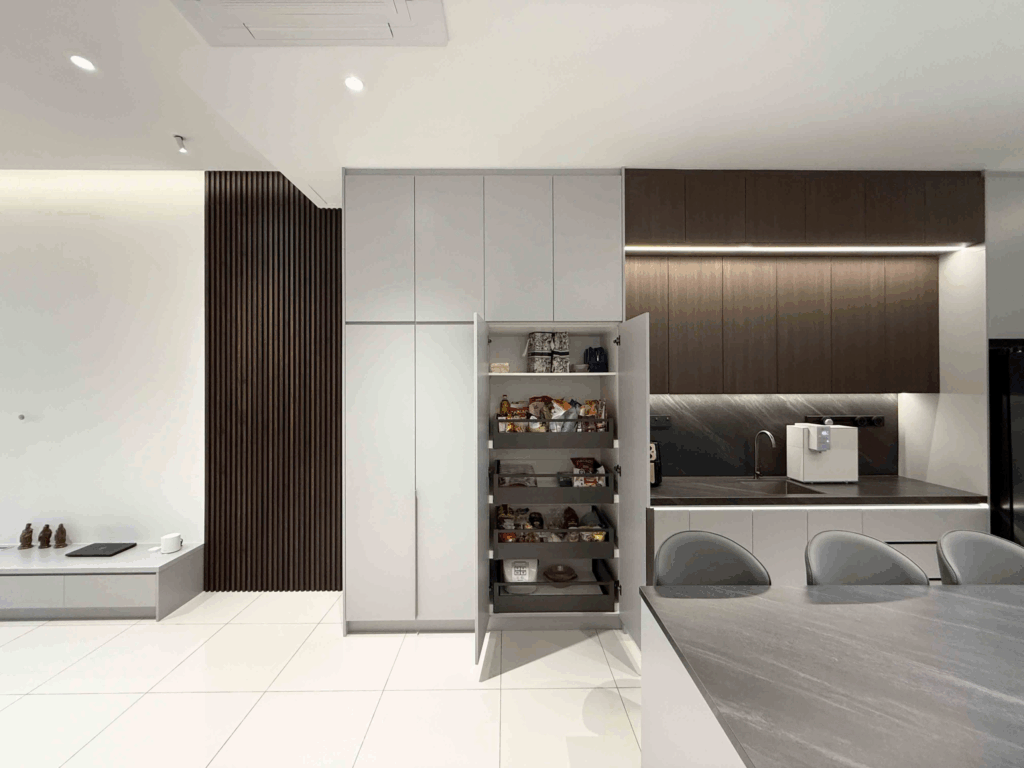
Storage is just as important in a dry kitchen as it is in a wet kitchen.
Consider incorporating:
- Deep drawers
- Pull-out organisers
- Appliance storage
- Pantry cabinets
- Hidden compartments
4. Integrated Appliances
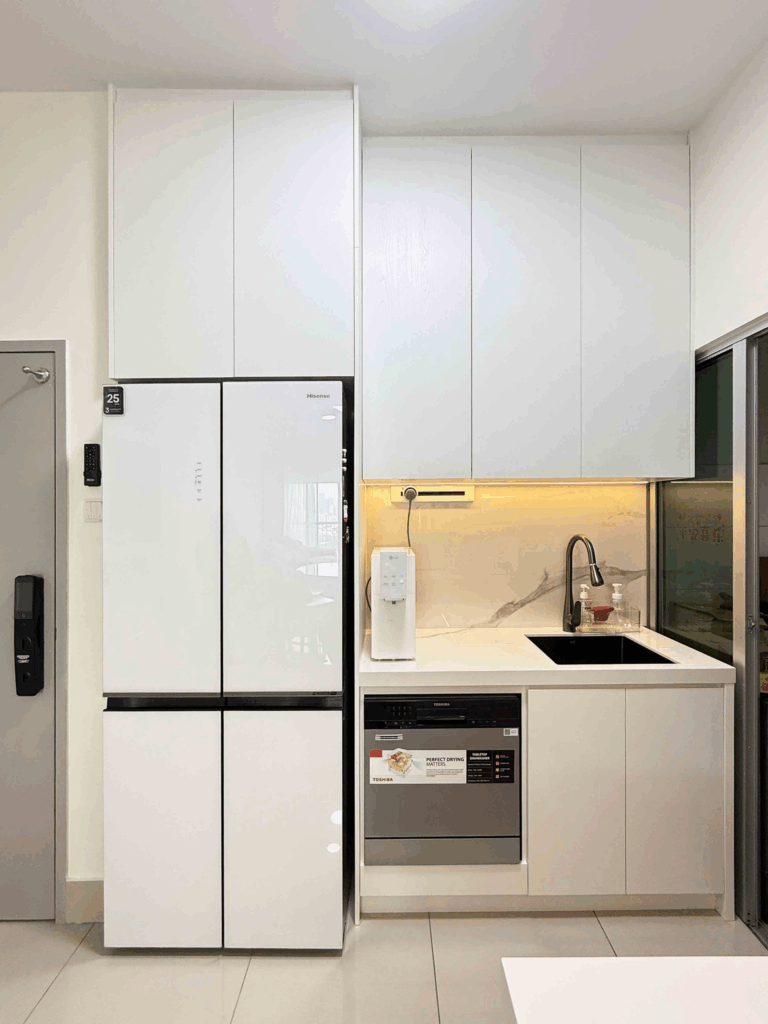
Modern dry kitchens often feature built-in appliances that create a seamless and sophisticated appearance.
Popular options include:
- Built-in fridge
- Built-in microwave oven
These integrated appliances help maintain a clean and cohesive design.
5. Decorative Elements
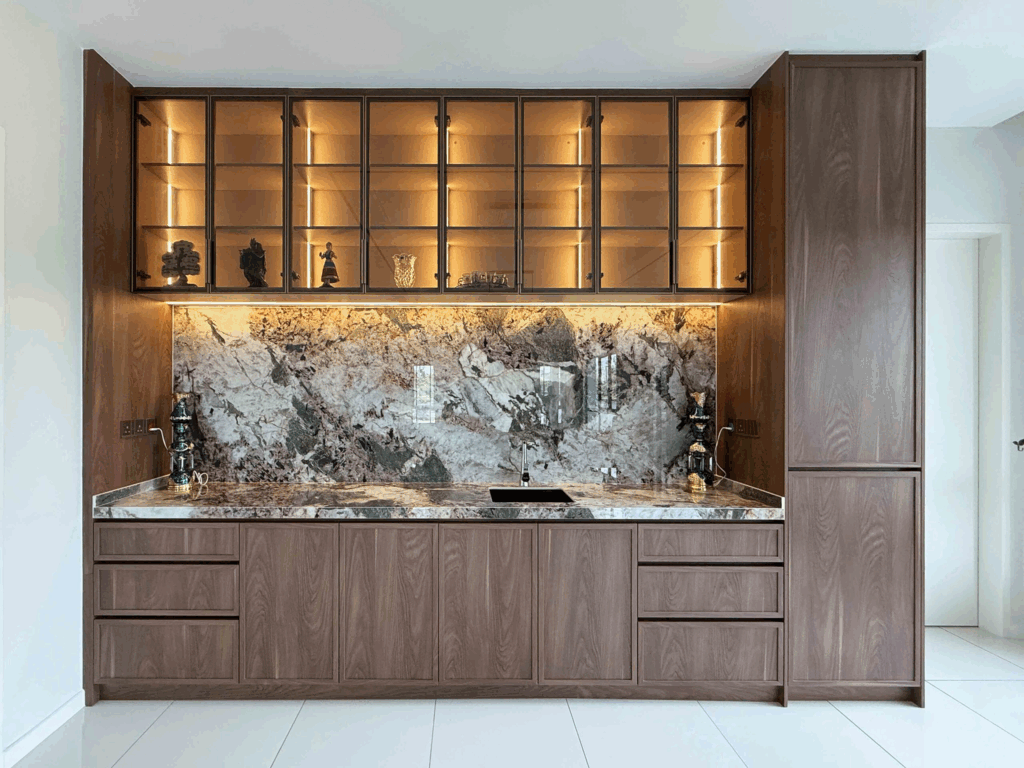
Since dry kitchens are often visible to guests, decorative features can play a larger role in the design.
Decorative elements such as display shelving, glass cabinets, feature lighting, decorative backsplashes, and statement kitchen islands can help personalise the space while enhancing its visual appeal.
6 Dry Kitchen Design Ideas for Modern Malaysian Homes
1. Create a Multi-Functional Kitchen Island
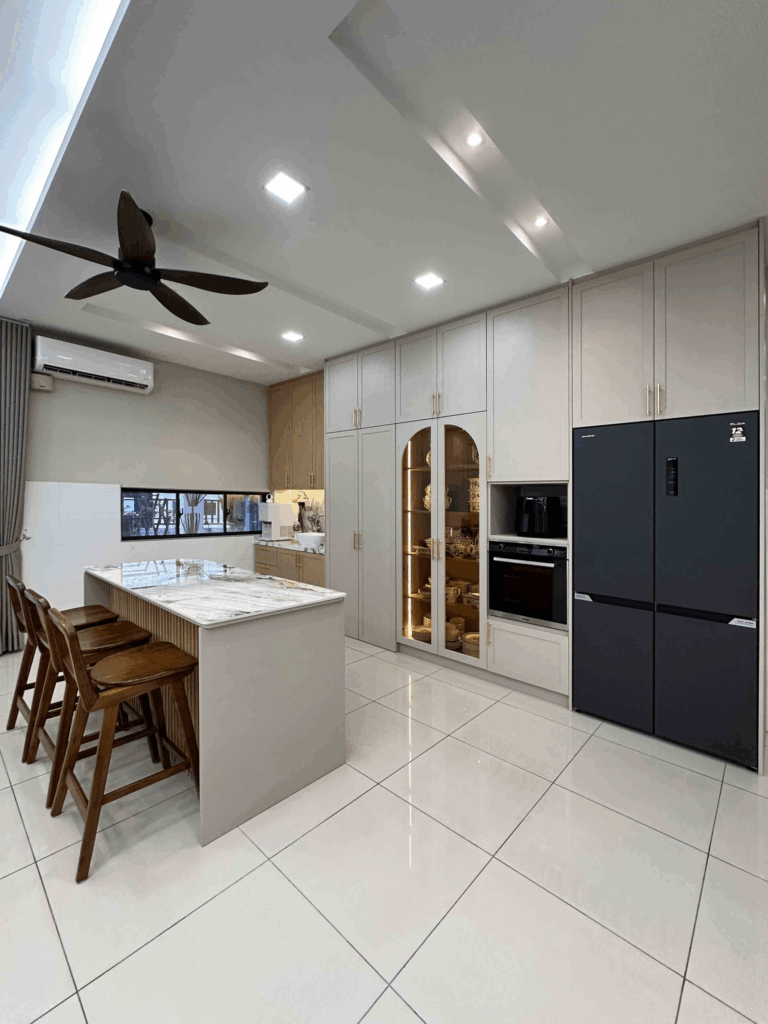
A kitchen island is one of the most popular features in modern dry kitchen design.
It can serve multiple purposes, including:
- Additional countertop space
- Casual dining area
- Entertaining guests
- Extra storage
For open-concept homes, a kitchen island also acts as a natural connection between the kitchen and living areas.
2. Incorporate Hidden Storage
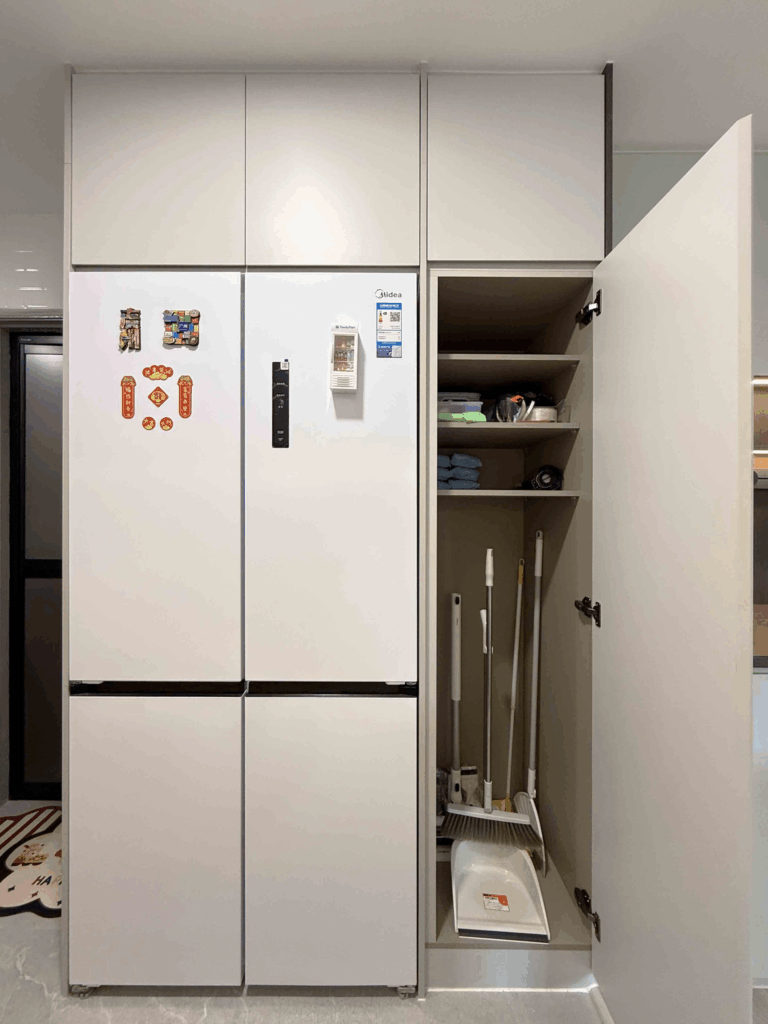
A stylish kitchen is often a clutter-free kitchen.
Hidden storage solutions help keep small appliances, utensils, and everyday items out of sight while maintaining a clean and organised appearance.
Options include:
- Appliance garages
- Pull-out pantry systems
- Concealed drawers
- Integrated waste bins
These features help maximise functionality without compromising aesthetics.
3. Use Glass Cabinets for Display
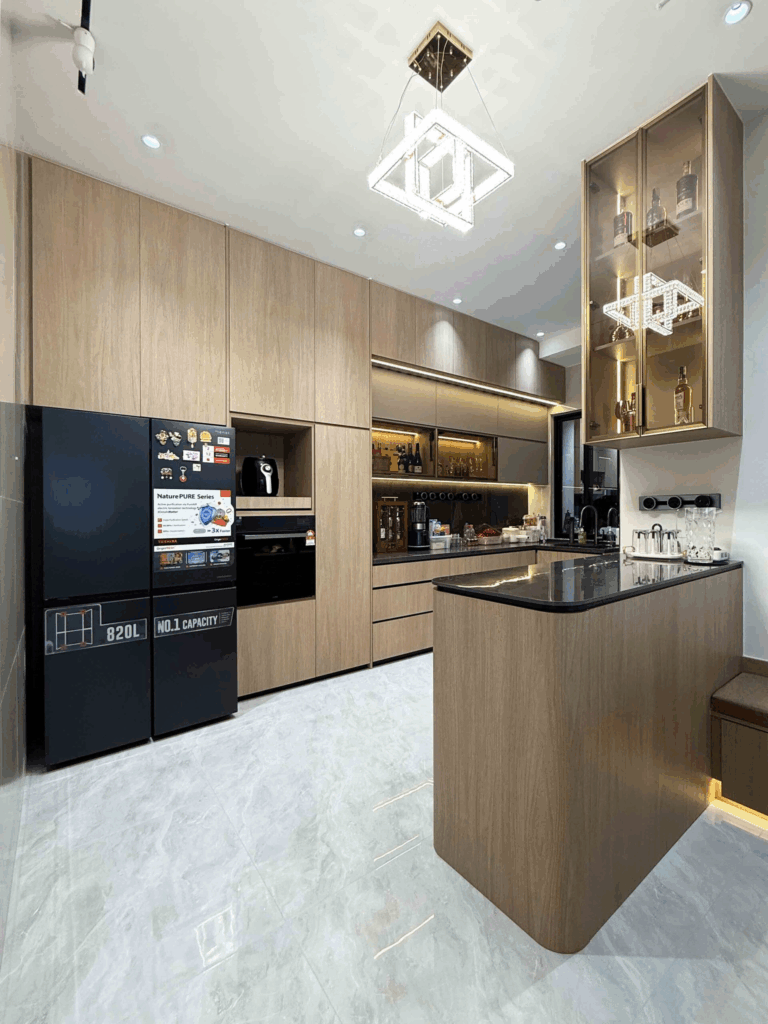
Glass-front cabinets provide an excellent opportunity to showcase decorative items, glassware, dinnerware, or collectibles.
When combined with interior cabinet lighting, they can create a sophisticated focal point while adding visual depth to the kitchen.
This approach works particularly well in contemporary and luxury kitchen designs.
4. Design a Dedicated Beverage Station
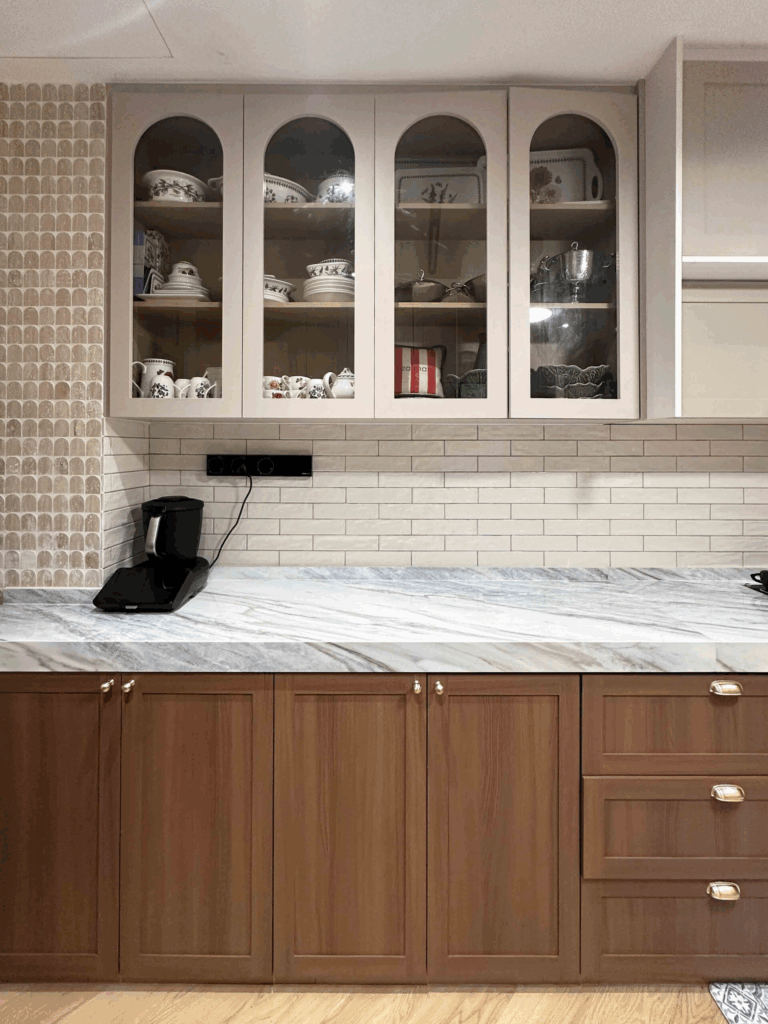
A dedicated beverage station has become increasingly popular among Malaysian homeowners.
This area can include:
- Coffee machines
- Tea preparation space
- Beverage storage
- Glassware organisation
Having a dedicated station helps streamline daily routines while creating a more premium kitchen experience.
5. Embrace an Open-Concept Layout
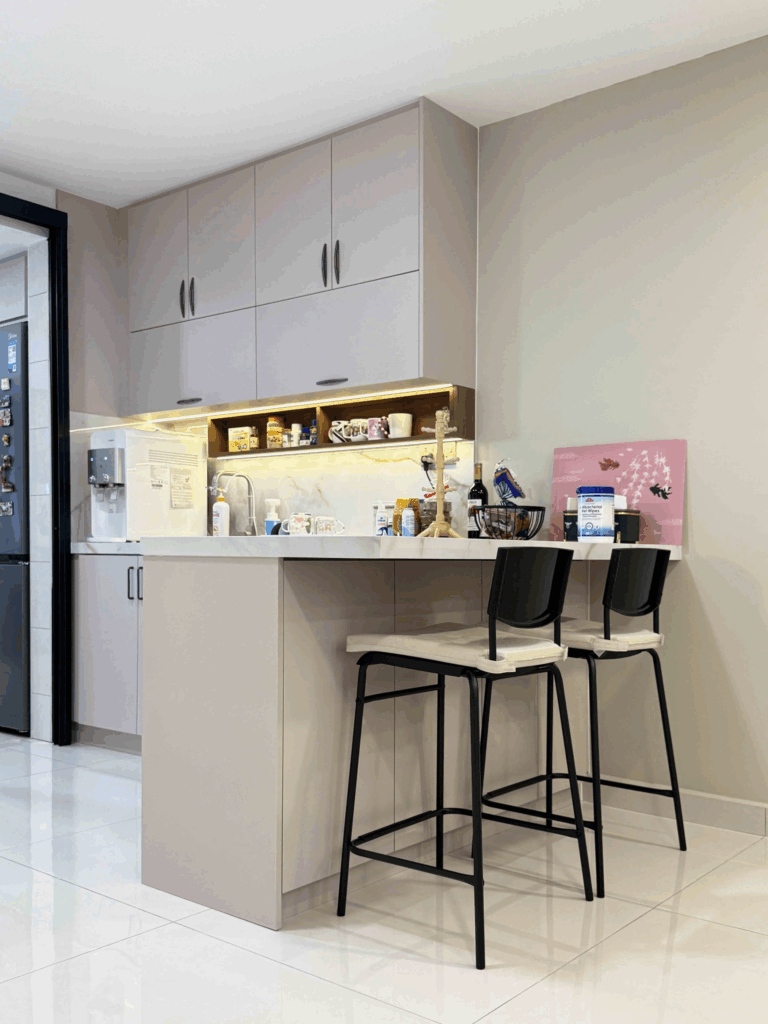
Many modern homes favour open-concept living because it encourages interaction between family members and guests.
An open dry kitchen can help:
- Improve natural light flow
- Create a sense of spaciousness
- Enhance connectivity between living spaces
- Make entertaining more enjoyable
6. Combine Modern Finishes with Timeless Design
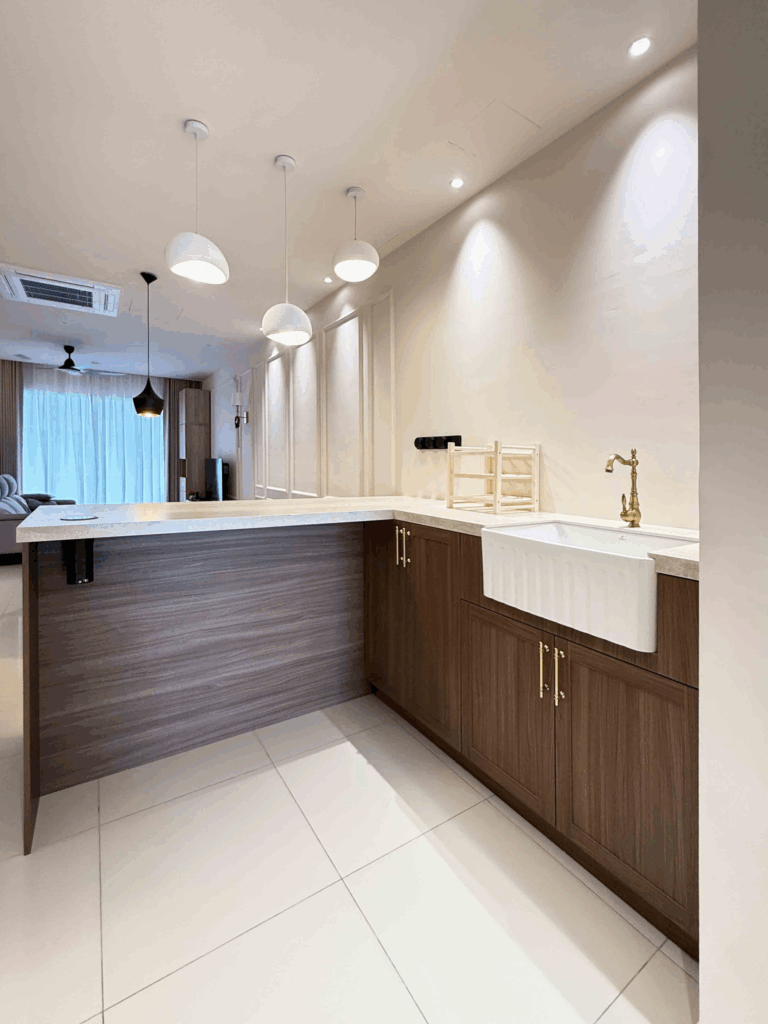
Kitchen trends come and go, but timeless design principles remain relevant for years.
Combining contemporary materials with neutral colours, clean lines, and practical layouts can help ensure your dry kitchen remains stylish over the long term.
At ACE Cabinet Design, we often recommend balancing modern aesthetics with practical functionality, so homeowners can enjoy a kitchen that looks great today and continues to feel relevant in the future.
Common Dry Kitchen Design Mistakes to Avoid
- Prioritising Appearance Over Functionality
While aesthetics is important, a dry kitchen should still support daily activities. Insufficient storage, limited countertop space, or poor workflow can quickly become frustrating.
- Not Planning Enough Storage
One of the most common mistakes is underestimating storage requirements. Even a dry kitchen needs adequate space for appliances, tableware, groceries, and household essentials.
- Choosing Trendy Designs Without Considering Longevity
Some design trends can become outdated quickly. Selecting timeless finishes and practical layouts often provides better long-term value.
- Overcrowding the Space
Adding too many decorative elements, appliances, or furniture pieces can make the kitchen feel cramped and cluttered.
- Ignoring Lighting Design
Lighting significantly impacts both functionality and aesthetics. Combining ambient, task, and accent lighting helps create a more balanced and inviting space.
How ACE Cabinet Design Helps You Build a Custom Dry Kitchen
Every homeowner has different preferences, lifestyles, and space requirements. That’s why a customised approach is essential when designing a dry kitchen.
At ACE Cabinet Design, we work closely with homeowners to create kitchen solutions that balance aesthetics, practicality, and long-term durability. From selecting cabinet materials and finishes to planning storage solutions and layouts, our team focuses on creating kitchens that are tailored to your specific needs.
Whether you prefer a modern minimalist style, contemporary luxury design, or a timeless classic look, we can help transform your ideas into a functional and stylish kitchen space.
Conclusion
A well-designed dry kitchen goes beyond creating a beautiful space. It helps improve organisation, enhances everyday convenience, and creates a welcoming environment for family and guests. By combining practical storage, thoughtful layouts, and timeless design elements, homeowners can create a kitchen that complements their lifestyle while adding lasting value to their home.
Whether your goal is to entertain more comfortably, improve functionality, or elevate your home’s overall aesthetic, investing in a carefully planned dry kitchen can deliver benefits that extend far beyond the kitchen itself.
Get Your Ideal Dry Kitchen with ACE Cabinet Design!
If you’re considering a dry kitchen renovation or planning a new kitchen for your home, thoughtful design and quality materials can make a significant difference in both appearance and functionality. Working with experienced kitchen specialists can help ensure your space is tailored to your lifestyle, storage requirements, and design preferences.
For a more personalised experience, you are welcome to Contact ACE Cabinet Design today to schedule a free consultation or visit our showrooms.
🔗 Explore more of our designs and services at acecabinetdesign.com.my
FAQs
What is the purpose of a dry kitchen?
A dry kitchen is primarily used for light food preparation, serving meals, storing small appliances, entertaining guests, and creating a stylish social space within the home.
What is the difference between a dry kitchen and a wet kitchen?
A dry kitchen focuses on aesthetics, organisation, and entertainment, while a wet kitchen is designed for heavy cooking activities that generate heat, grease, moisture, and cooking odours.
What should be included in a dry kitchen?
A functional dry kitchen should include stylish cabinets, sufficient countertop space, practical storage solutions, integrated appliances, and decorative elements that complement the overall design.
Is a kitchen island necessary for a dry kitchen?
While not essential, a kitchen island can provide additional workspace, storage, casual dining options, and a focal point for social interaction.
How can I make my dry kitchen look more luxurious?
Incorporating premium finishes, integrated appliances, feature lighting, glass display cabinets, and well-designed storage solutions can help create a more sophisticated appearance.