
New House Renovation Guide: Don’t Waste Your Money!

Got the keys to your new home? Exciting as it is, one wrong renovation decision could cost you thousands of ringgit. Before choosing tiles, contacting contractors, or planning your dream kitchen, take a step back and plan your budget, layout, and priorities first.
From estimating renovation costs in Malaysia to choosing kitchen cabinets and wardrobes, a little planning can save you from costly mistakes. Here’s what you need to know before starting your renovation, so you can make smarter decisions, maximise your budget, and create a home that suits your lifestyle.
Key Takeaways
- A successful new house renovation starts with a realistic budget, a clear plan and an understanding of your priorities.
- Inspect your new house for defects and report them to the developer before starting renovation work.
- Plan your furniture placement, electrical points, plumbing and storage needs before finalising your house layout.
- Follow the correct renovation sequence to minimise delays, prevent damage to completed work and avoid unnecessary costs.
- Kitchen cabinets and wardrobes should be planned early based on your available space, storage needs, appliance dimensions and preferred materials.
- Compare itemised quotations and understand the scope of work before choosing a renovation contractor.
- Set aside a contingency fund to manage unexpected expenses during renovation.
- The best renovation decisions balance your budget, daily lifestyle, long-term needs and the practicality of your home.
How Much Does New House Renovation Cost in Malaysia?
The cost of renovating a new house in Malaysia depends on your property size, material choices, and scope of work. A simple makeover will cost less than a renovation involving new flooring, kitchen cabinets, wardrobes, and major electrical or plumbing work.
Published renovation guides estimate that basic upgrades may cost tens of thousands of ringgits, while more extensive projects can exceed RM100,000. Actual costs will depend on your requirements, so request itemised quotations before setting up your budget.
The main factors that affect your renovation cost are:
Property size: Larger homes generally require more materials and labour, increasing the overall cost.
Material choices: Flooring, countertops, cabinet boards and hardware come at different price points depending on their quality, design and specifications.
Built-in cabinets: Kitchen cabinets and wardrobes vary in cost depending on their dimensions, materials, storage features and finishing.
Additional work: Hacking, electrical upgrades, plumbing changes and repairs can be added to your renovation expenses.
Before contacting contractors, list the work you want to complete and separate essential items from optional upgrades. Compare itemised quotations to understand what each price includes and set aside some money for unexpected expenses.
What Should You Renovate First in a New House?

Before choosing furniture or decorative finishes, focus on work that’s difficult or costly to change later.
Start by inspecting your house for defects such as leaks, cracks, and drainage issues. Report any developer defects before renovation begins. Next, finalise your layout and identify any changes needed to wall, electrical points and plumbing.
Once the major work is complete, you can move on to flooring, painting, built-in cabinets, and appliances. Prioritising essential work first helps you avoid unnecessary changes and manage your renovation budget more effectively.
How to Plan Your House Layout Before Renovation
A well-planned layout helps you make better use of your space and keeps your home practical for everyday living.
Measure your space: Check room dimensions, windows, doorways and existing electrical or plumbing points.
Plan furniture placement: Ensure there’s enough room to walk around, open doors and pull-out drawers.
Think about storage: Identify where you’ll need wardrobes, kitchen cabinets, and other built-in storage.
Before confirming your design, sketch your furniture and storage arrangements on a floor plan. This makes it easier to spot space issues before renovation begins.
What Is the Correct Order for New House Renovation?
Once your layout is finalised, the next step is to plan the work in the right sequence. This helps reduce delays, prevent damage, and avoid paying for the same work twice.
- Inspection and planning: Check for defects and finalise your renovation layout.
- Hacking and masonry: Complete approved wall alterations and major changes.
- Electrical and plumbing: Install or relocate wiring, pipes, and drainage.
- Waterproofing: Waterproof bathrooms and other wet areas before tiling.
- Ceilings and wall preparation: Complete ceiling work, plastering and repairs.
- Flooring and painting: Install floor finishes and paint, coordinating the order to protect completed surfaces.
- Cabinet installation: Fit kitchen cabinets, wardrobes, and countertops according to the installation plan.
- Fixtures and appliances: Install lights, sanitaryware, and kitchen appliances.
- Final inspection: Test electrical points, check for leaks, and complete touch-ups.
The exact sequence may vary depending on your materials and contractor’s methods. Confirm the schedule before work begins.
How to Plan Kitchen Cabinets and Wardrobes for Your New Home
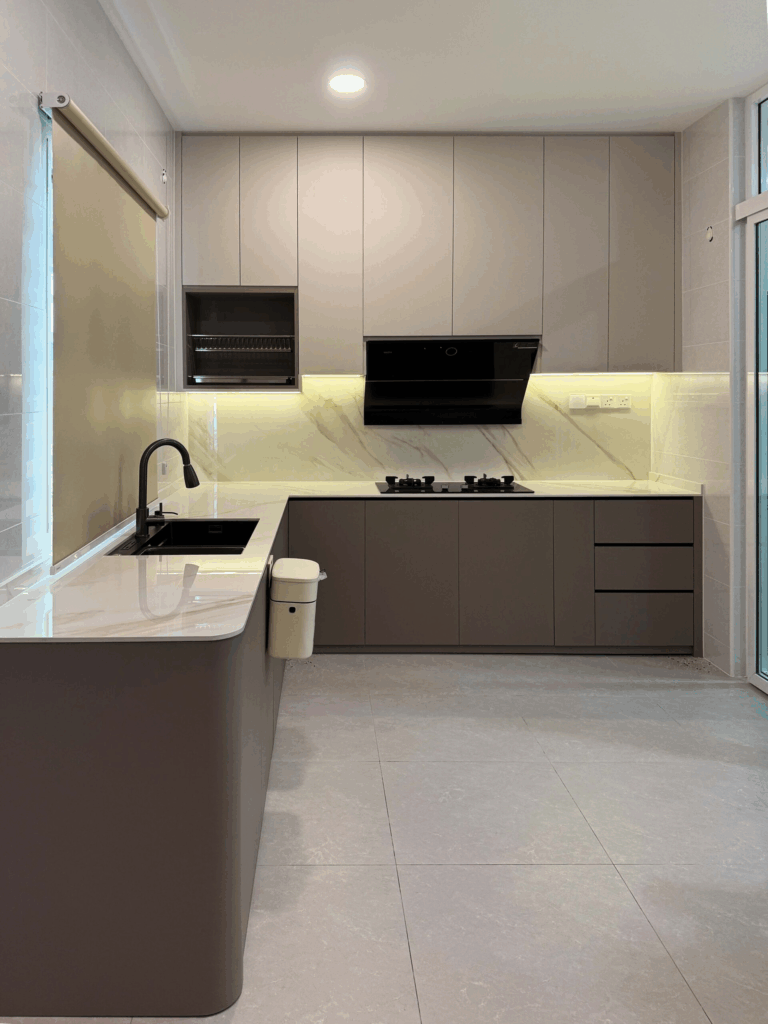
With your layout in place, you can plan built-in cabinets around your available space, storage needs and budget.
For kitchen cabinets, consider your cooking habits, appliance positions, and the space needed for cookware and pantry items. You can also discover the Latest Trends for Kitchen Cabinet Design in 2026 for ideas on layouts, styles and practical features. For wardrobes, decide how much hanging space, shelving and drawer storage you need, and explore Modern Wardrobe Designs for Stylish Homes to find inspiration that suits your space.
Material selection also matters. Compare cabinet board materials, surface finishes and edge protection based on your budget and where the cabinets will be used.
Before production begins, confirm your measurements, appliance sizes and electrical or plumbing points with your cabinet supplier. This helps minimise fitting issues, delays and unexpected expenses.
8 Costly New House Renovation Mistakes to Avoid

A few small mistakes can lead to extra expenses during your new house renovation. Here’s what to watch out for and how to avoid them.
1. Not setting a clear budget
List your essential renovation work, such as electrical upgrades, flooring and built-in cabinets. Set a spending limit for each item and keep a contingency fund for unexpected costs.
2. Ignoring house defects
Check walls, ceilings, windows, plumbing, and drainage before renovation begins. Take photos of any defects and report them to your developer before arranging repairs.
3. Changing the layout halfway through
Mark your planned furniture, appliances and storage on a floor plan first. Confirm wall alterations, electrical points and plumbing locations with your contractor before work starts.
4. Choosing materials based on appearance alone
Compare material specifications, maintenance requirements, warranties, and prices before deciding. Ask your supplier for samples so you can check the actual colour and finish.
5. Underestimating storage needs
List the items you need to store in each room. Measure bulky belongings and plan the number of shelves, drawers, and hanging compartments before finalising your cabinets and wardrobes.
6. Forgetting electrical and plumbing points
Mark where you need power outlets, switches, water supply, and drainage based on your furniture and appliance layout. Confirm their positions with your electrician and plumber before installation.
7. Choosing a contractor based on price alone
Get at least two or three quotations and compare the work scope, material specifications, payment schedule, and estimated completion date. Ask for clarification on anything excluded from the price.
8. Rushing into cabinet installation
Confirm your final measurements, appliance dimensions, cabinet materials, and design before production begins. Arrange a site measurement with your cabinet supplier to reduce the risk of fitting problems.
Conclusion
A successful new house renovation starts with careful planning, not just choosing beautiful designs. By setting up a budget, planning your layout and following a suitable renovation sequence, you can reduce unnecessary expenses and create a home that fits your lifestyle.
Pay special attention to built-in cabinets and wardrobes, as their measurements, materials and storage layouts affect how you use your space every day. Making these decisions early can help you avoid costly changes later.
Create a Healthier, More Sustainable Home with ACE Cabinet Design

Planning your kitchen cabinets or wardrobes for your new home? ACE Cabinet Design offers customised cabinet solutions to suit different layouts, storage needs and design preferences. Our team can help you explore suitable options for your space and budget.
For a more personalised experience, you are welcome to Contact ACE Cabinet Design today to schedule a free consultation or visit our showrooms.
🔗 Explore more of our designs and services at acecabinetdesign.com.my
FAQs
1. How much should I save for my first home renovation in Malaysia?
Your renovation budget depends on your property size, material choices, and the work required. Basic upgrades may cost tens of thousands of ringgits, while more extensive renovations can exceed RM100,000. Get itemised quotations and keep a contingency fund for unexpected expenses.
2. Should I renovate my new house before moving in?
If your budget and schedule allow, completing major renovation work before moving in can be more convenient. Flooring, electrical work, plumbing, and built-in cabinets may create dust, noise, and disruption. Inspect your house and report any defects to the developer before renovation begins.
3. Can I renovate my new house immediately after getting the keys?
Before starting, inspect the property for defects and check your renovation requirements with the developer or building management. For strata properties, you may need renovation approval and must follow rules on working hours, contractor access and permitted work.
4. What renovations add the most value to a house?
Practical improvements that support everyday living can make a home more appealing. These may include a functional kitchen, sufficient storage, well-maintained bathrooms, good lighting, and an efficient layout. Prioritise improvements that suit your needs and budget rather than spending on trends alone.
5. Is it cheaper to buy loose furniture or install built-in cabinets?
Loose furniture can be more affordable upfront and easier to move, while built-in cabinets can make better use of awkward corners and available wall space. The more cost-effective option depends on your storage needs, room dimensions, material choices, and how long you plan to stay in the home.
6. When should I order kitchen cabinets for a new house?
Start planning your kitchen cabinets during the layout and renovation planning stage. Confirm appliance dimensions, electrical points, plumbing locations and cabinet measurements before production. Coordinate installation with your contractor to avoid delays or modify completed work.
7. How much extra money should I set aside for unexpected renovation costs?
There is no single amount that suits every project, but setting aside around 10–15% of your renovation budget as a contingency is a commonly used planning guideline. Older properties or renovations involving uncertain repair work may need a larger reserve. Keep this money separate from your planned spending.
8. What should I check before hiring a renovation contractor?
Compare at least two or three quotations and check whether each includes the same scope of work, materials, labour, payment schedule and estimated completion date. Ask for clarification on exclusions, confirm the contractor’s experience, and document any agreed changes in writing.