
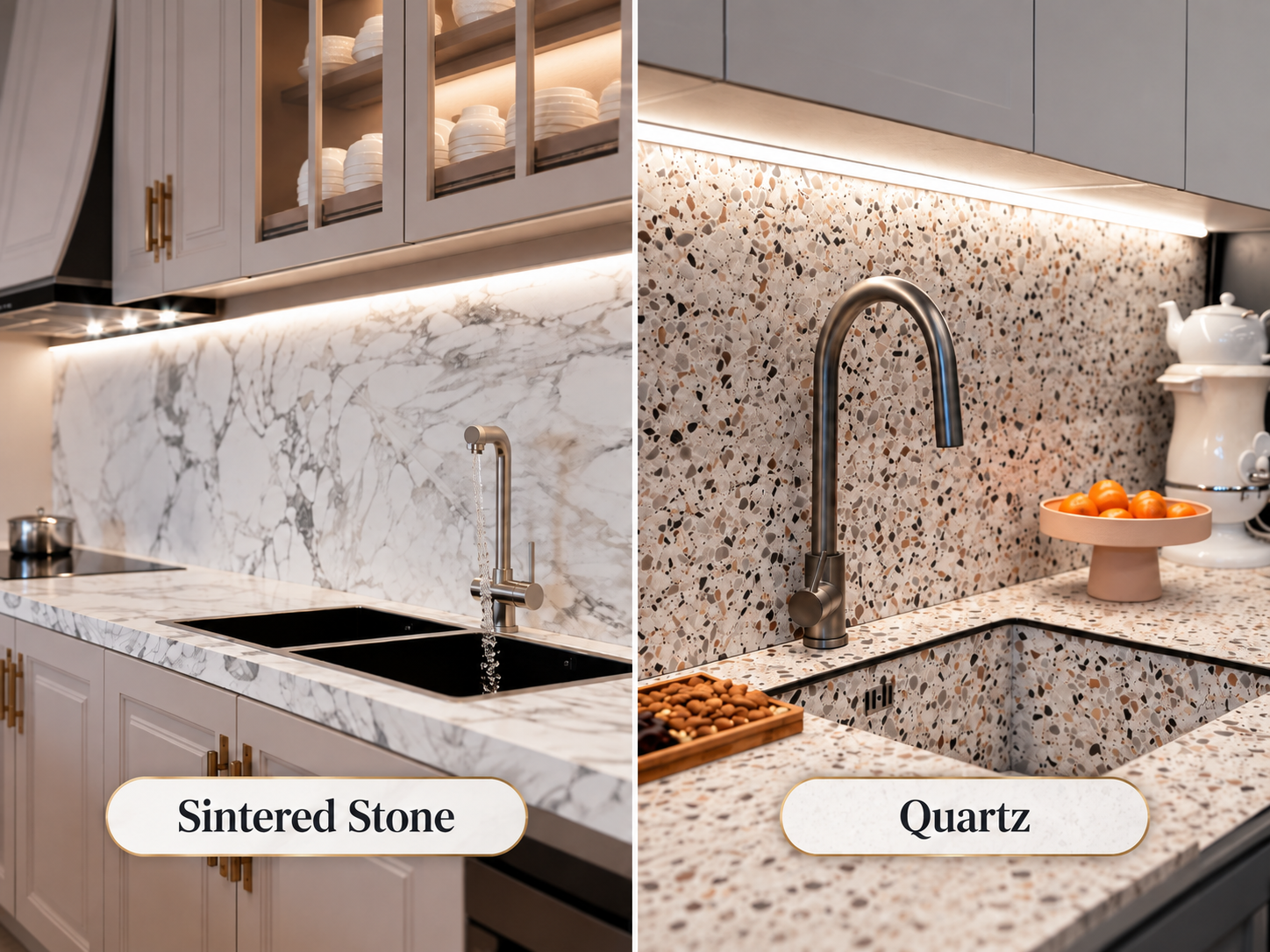
Sintered Stone vs Quartz: Best Kitchen Countertop in Malaysia
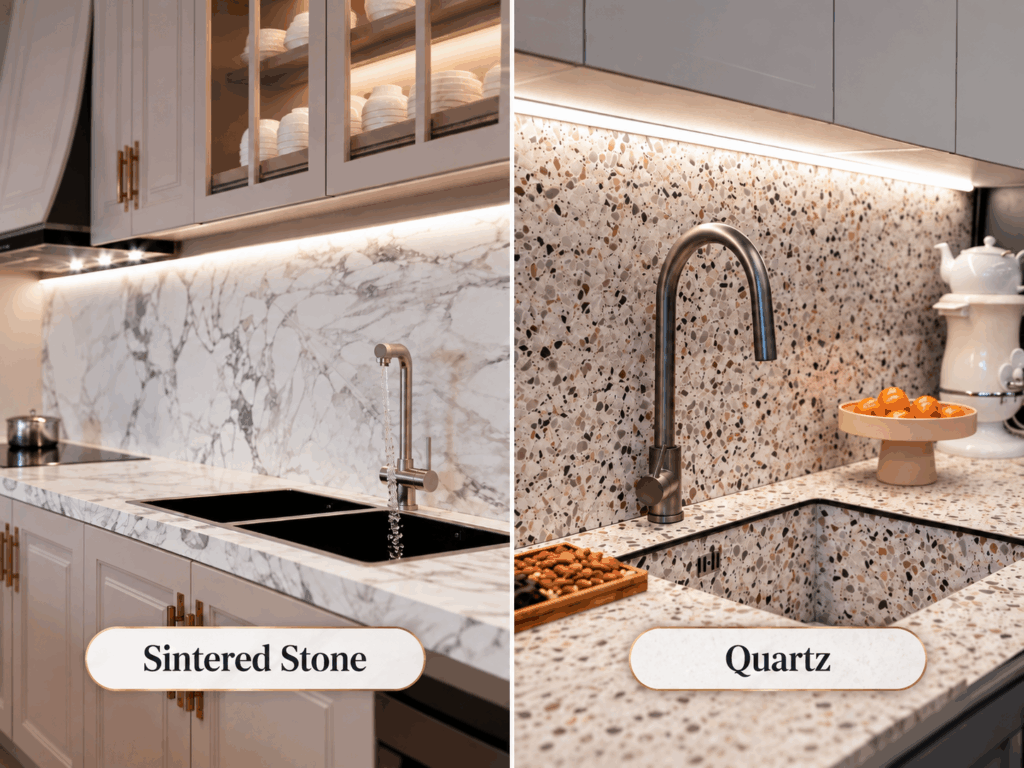
Choosing a Kitchen Countertop is more than matching your cabinets. It needs to handle daily food preparation, spills, heat, cleaning and the demands of a busy Malaysian kitchen. Two popular options are sintered stone and quartz, but their differences in heat resistance, durability, maintenance and appearance can affect which one suits your kitchen better.
So, when comparing sintered stone vs quartz, which should you choose? The answer depends on how you use your kitchen, whether it is a wet or dry kitchen, and how the countertop works with your cabinet structure. Understanding these differences can help you choose a Kitchen Countertop that fits both your lifestyle and kitchen design.
Key Takeaways
- Sintered stone and quartz are both popular Kitchen Countertop options in Malaysia, but they offer different advantages depending on how you use your kitchen.
- Sintered stone is worth considering for heavy-cooking wet kitchens, especially where heat and scratch resistance are important.
- Quartz can suit dry kitchens and entertaining spaces, particularly for homeowners who prefer easy maintenance and a consistent appearance.
- For a kitchen island, both quartz and sintered stone can work, but the island size, overhang, cabinet structure and intended use should be considered together.
- Your cabinet structure matters just as much as your countertop material. Proper support is especially important for large countertops, islands and extended overhangs.
- Sink, hob, tap, and appliance cut-outs should be planned together with your cabinet layout to ensure the countertop has sufficient support.
- For Malaysian homes, consider your cooking habits, kitchen type, maintenance needs and overall kitchen design before choosing between sintered stone and quartz.
- There is no one-size-fits-all Kitchen Countertop. The right choice depends on how your kitchen is used and how the countertop works with your cabinets.
What Is a Sintered Stone Kitchen Countertop?
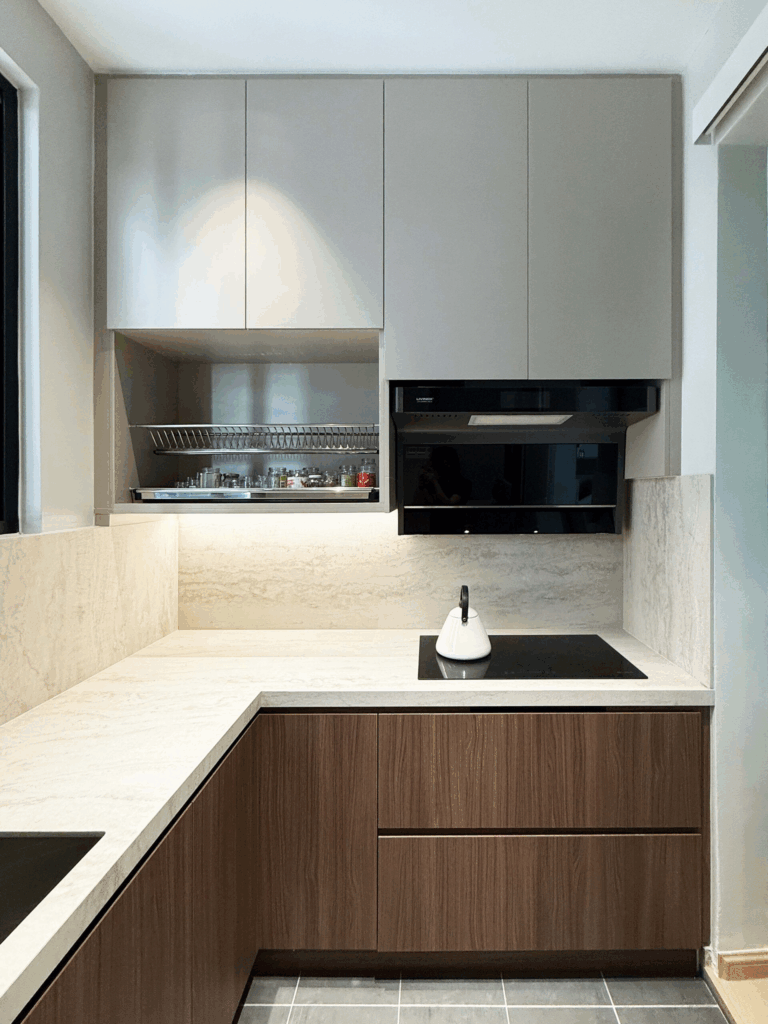
Sintered stone is an engineered surface made by compacting and processing natural minerals under very high pressure and temperature.
The manufacturing process creates a dense surface designed for demanding applications. It is commonly used for kitchen countertops, backsplashes, and other interior surfaces.
One of the main characteristics of sintered stone is its resistance to heat. This can be useful in a kitchen where hot cookware and cooking activities are part of everyday life.
Other characteristics commonly associated with sintered stone include:
- High heat resistance
- Scratch resistance
- Durable surface
- Stain resistance
- Low-maintenance cleaning
- Wide range of colours and patterns
- Modern stone-like appearance
However, durability does not mean the material is impossible to damage. Edges and corners can still require careful handling, particularly during installation and when subjected to strong impact.
For homeowners who frequently cook and want a countertop that can cope with higher temperatures, sintered stone may be worth considering.
What Is a Quartz Kitchen Countertop?
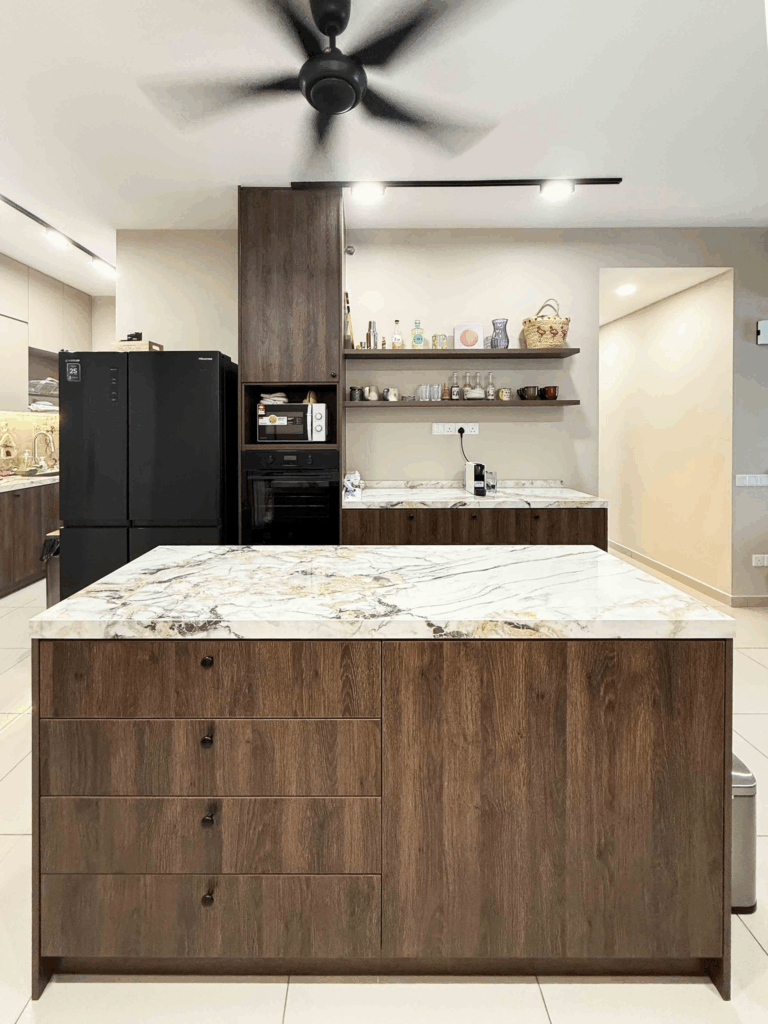
Quartz countertops are engineered surfaces made primarily from quartz minerals combined with resins, pigments, and other materials.
Unlike natural stone, engineered quartz is manufactured to achieve a more controlled and consistent appearance. This makes it available in many colours, patterns, and finishes.
Quartz is also known for having a non-porous surface, which makes it relatively easy to clean and resistant to everyday staining.
Common characteristics of quartz countertops include:
- Non-porous surface
- Stain resistance
- Easy maintenance
- Consistent patterns and colours
- Wide design selection
- Durable surface for everyday kitchen use
However, quartz has a different heat profile from sintered stone. It is generally advisable to avoid placing extremely hot cookware directly on a quartz countertop and instead use a heat-resistant trivet or mat.
Sintered Stone vs Quartz: 7 Key Differences
| Key Difference | Sintered Stone | Quartz |
| 1. Heat Resistance | Highly resistant to high temperatures, making it suitable for kitchens with frequent cooking and heat exposure. | Suitable for everyday kitchen use, but direct exposure to very high heat should be avoided. |
| 2. Scratch Resistance | Highly resistant to scratches and everyday surface wear. | Durable and scratch-resistant, but using chopping boards is still recommended. |
| 3. Stain Resistance | Dense, low-absorption surface helps resist common kitchen stains. | Non-porous surface makes it resistant to everyday stains and easy to wipe clean. |
| 4. Maintenance | Requires relatively simple routine cleaning with suitable cleaning products. | Easy to maintain with regular wiping and cleaning. |
| 5. Appearance & Design | Available in various colours, patterns and stone-like finishes, including designs inspired by natural stone. | Available in a wide range of colours and patterns with a more consistent appearance. |
| 6. Fabrication & Installation | Requires careful handling and professional fabrication, particularly around edges and cut-outs. | Also requires proper fabrication and installation for sinks, hobs, joints and edges. |
| 7. Best Application | A suitable consideration for heavy-cooking kitchens where heat and scratch resistance are important. | A suitable consideration for homeowners who prioritise easy maintenance, consistent design and everyday functionality. |
Which Countertop Suits Your Kitchen Better?
A) For a Heavy-Cooking Wet Kitchen
If you frequently stir-fry, deep-fry, boil, steam or prepare several dishes at once, your countertop will experience more heat, moisture, grease and daily wear.
In this situation, heat resistance and easy maintenance have become important considerations.
Sintered stone can be an option for homeowners who want a countertop with strong heat and scratch resistance.
However, countertop material is only one part of a practical wet kitchen. Cabinet materials, ventilation, storage, and layout all contribute to how well the space performs.
For more ideas on planning a practical cooking space, explore 6 Wet Kitchen Design Ideas for Modern Malaysian Homes.
B) For a Dry Kitchen
A dry kitchen is typically used for lighter food preparation, serving, entertaining, and socialising.
Since the area may be more visible from the living or dining space, appearance can become a bigger consideration.
Quartz can work well in this type of setting because it offers a clean, consistent appearance and a surface that is easy to maintain.
Sintered stone can also be suitable if you prefer its stone-like appearance or want additional heat and scratch resistance.
The important point is to consider how the dry kitchen will actually be used rather than choosing purely based on trends.
For more dry kitchen inspiration, read 6 Dry Kitchen Design Ideas for Stylish Malaysian Homes.
C) For a Kitchen Island
Kitchen islands often become the visual centre of a modern kitchen.
Apart from providing additional preparation space, an island can also function as a breakfast counter, dining area, storage zone or gathering point.
For an island, both quartz and sintered stones can be considered. Your decision should take into account the island’s size, overhang, seating arrangement, cabinet structure, and the amount of cooking or food preparation that will happen there.
A large island also requires proper structural planning because the countertop cannot simply be selected independently from the cabinetry underneath.
For inspiration, take a look at Top 7 Chic Kitchen Cabinet with Island Designs.
How Your Cabinet Design Affects Your Countertop Choice
1. Cabinet Structure & Countertop Support
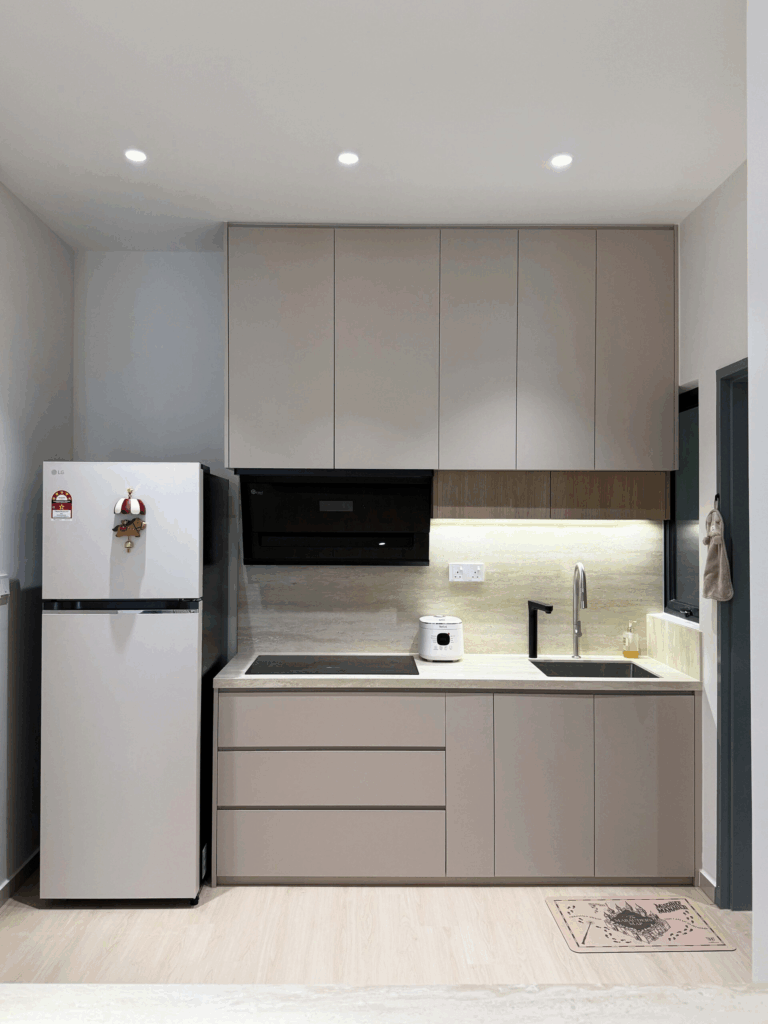
A countertop needs adequate support from the cabinet’s underneath. This becomes especially important for large countertops, kitchen islands, and areas with extended overhangs.
The cabinet structure, internal support, and countertop dimensions should therefore be planned together. A durable countertop still requires proper structural support to perform as intended.
2. Countertop Thickness & Edge Design
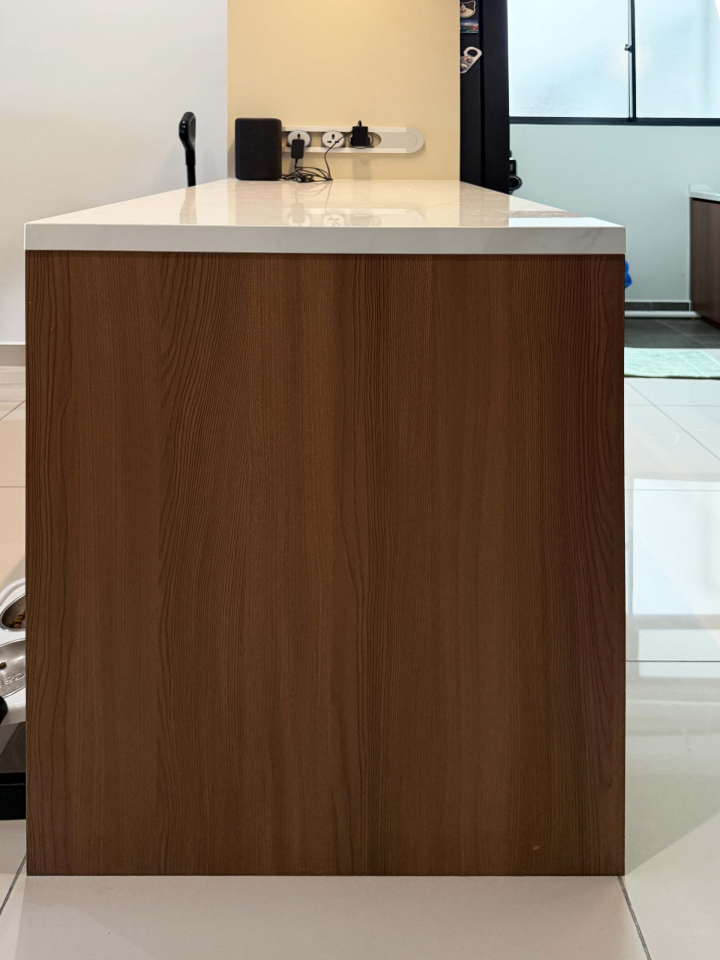
Thickness affects the overall appearance of your kitchen. A thicker countertop can create a more substantial, solid appearance, while a slimmer profile can complement a minimalist kitchen.
Edge profiles also influence the final look. Depending on the design, homeowners can consider simple straight edges, softened edges or other profiles recommended for the selected material.
3. Sink, Hob & Appliance Cut-Outs
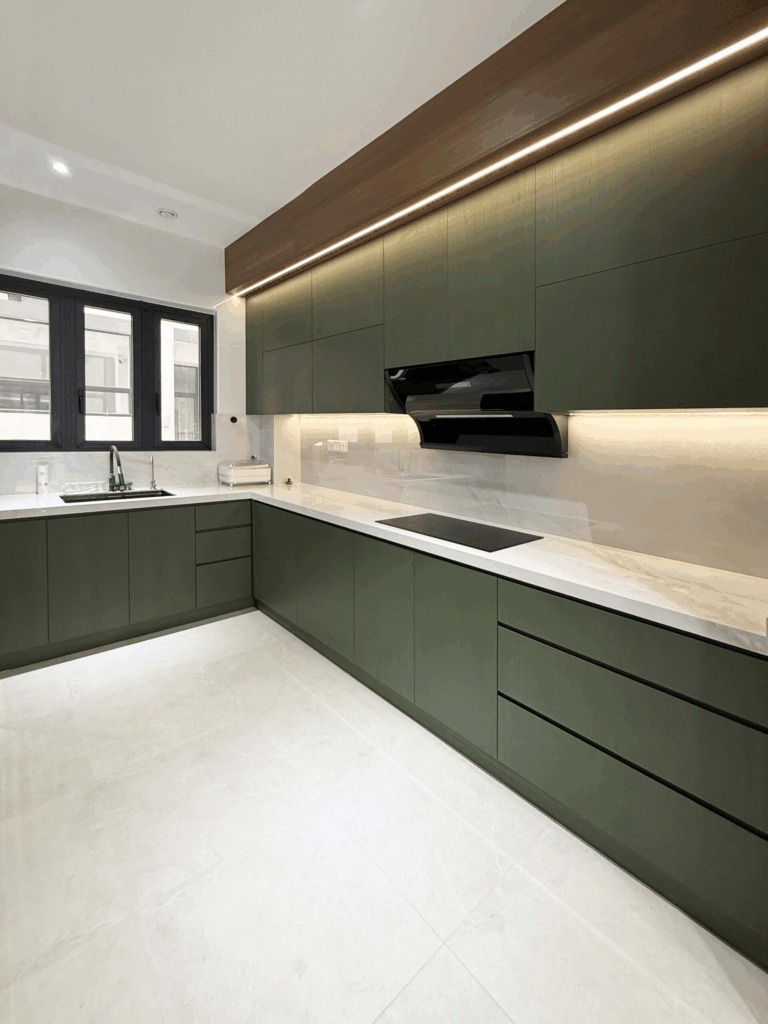
Countertop cut-outs need to be planned before installation.
Common examples include:
- Sink cut-outs
- Hob cut-outs
- Tap holes
- Power socket locations
- Built-in appliance openings
The location and size of these openings should be coordinated with the cabinet layout and appliances.
This is particularly important because cut-outs can affect the available countertop support around sinks and hobs.
4. Matching Countertop Colours With Kitchen Cabinets
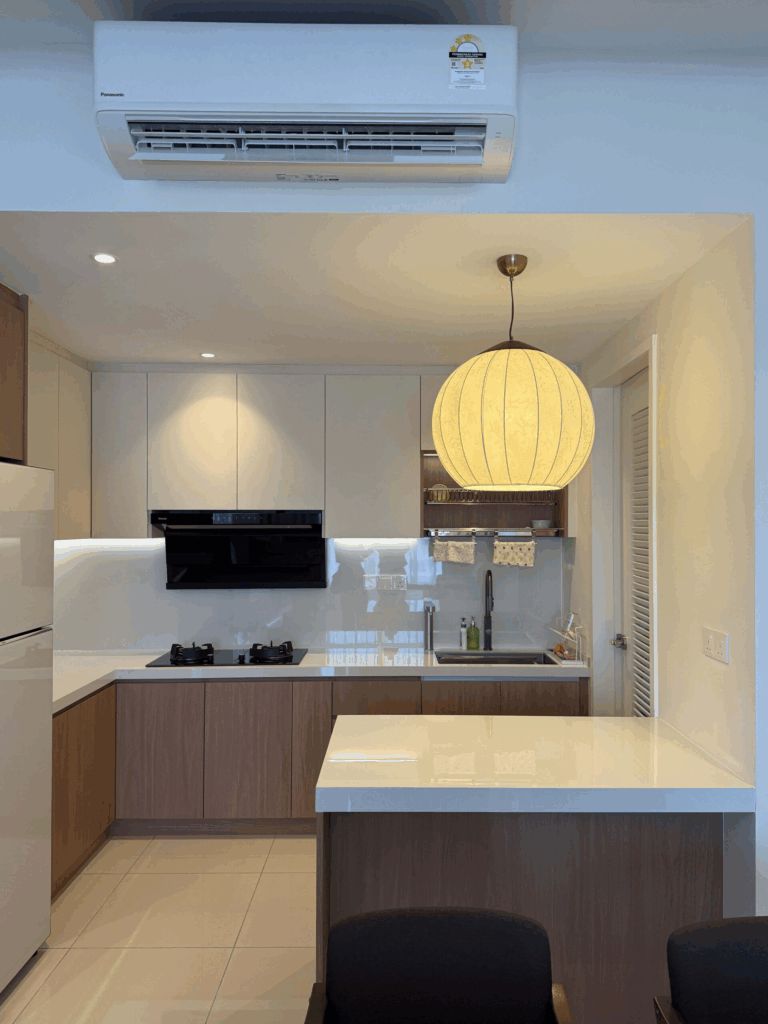
Your countertop does not have to match your cabinets exactly. Instead, think about how the two materials work together.
For example,
Light cabinets + darker countertop: Creates visual contrast and can make the countertop a focal point.
Wood-effect cabinets + neutral countertop: Creates a warmer and more natural-looking kitchen.
Dark cabinets + light countertop: Creates contrast while helping the countertop stand out.
Monochromatic kitchen Using similar tones can create a more seamless and minimalist appearance.
For more kitchen cabinet colour and design inspiration, read Discover the Latest Trends for Kitchen Cabinet Design in 2026.
Which Should You Choose: Sintered Stone or Quartz?
| Your Priority | Consider |
| Frequent heavy cooking | Sintered stone |
| High heat resistance | Sintered stone |
| Scratch resistance | Sintered stone |
| Easy everyday cleaning | Quartz or sintered stone |
| Consistent colours and patterns | Quartz |
| Modern stone-like appearance | Quartz or sintered stone |
| Dry kitchen / entertaining area | Quartz or sintered stone |
| Kitchen exposed to frequent heat | Sintered stone |
Think about your cooking habits first, followed by your design preferences and budget.
If you frequently cook at high temperatures, sintered stone may make sense. If your priority is a consistent design and easy everyday maintenance, quartz may be a suitable option.
5 Common Mistakes When Choosing a Kitchen Countertop
1. Choosing Based Only on Appearance
A countertop may look beautiful in a showroom but may not suit the way you use your kitchen.
Consider heat, spills, cleaning, cooking habits and daily usage before deciding.
2. Ignoring Cabinet Support
A countertop is not independent from the cabinet underneath.
Insufficient support can become a problem, particularly for larger surfaces and islands.
3. Forgetting About Cut-Outs
Sink and hob positions can affect the usable countertop area and structural support.
Always finalise appliance dimensions and positions before countertop fabrication.
4. Choosing the Colour Too Late
Countertop colour affects the entire kitchen’s visual balance.
It is better to compare the countertop with your cabinet door, flooring, backsplash, and hardware before finalising the design.
5. Assuming One Material Is Best for Every Kitchen
The sintered stone vs quartz debate is not simply about which material is “better.”
A heavy-cooking wet kitchen may have different requirements from a dry kitchen or island used mainly for entertainment. Your lifestyle should guide the decision.
Conclusion
When comparing sintered stone vs quartz, both materials can be suitable choices for a modern kitchen.
Sintered stone stands out for applications where heat and scratch resistance are important, while quartz offers a non-porous, easy-to-maintain surface with consistent design options.
However, choosing the right kitchen countertop involves more than comparing the countertop material itself.
You also need to consider your kitchen type, cooking habits, cabinet structure, countertop thickness, cut-outs, island design, and overall colour scheme.
The best approach is to plan the cabinet and countertop together from the beginning.
Create Your Kitchen Countertop with ACE Cabinet Design

Choosing between sintered stone and quartz is only one part of creating a practical kitchen. Your countertop should work together with your cabinet layout, storage needs, appliances, and overall kitchen style. Whether you’re planning a wet kitchen for daily cooking, a dry kitchen for entertaining or a kitchen island as a central feature, proper planning can help you create a space that works for your home.
For a more personalised experience, you are welcome to Contact ACE Cabinet Design today to schedule a free consultation or visit our showrooms.
🔗 Explore more of our designs and services at acecabinetdesign.com.my
FAQs
1. Is sintered stone or quartz better for a kitchen countertop in Malaysia?
Both can be suitable for Malaysian kitchens. Sintered stone may be worth considering for heavy cooking and higher heat exposure, while quartz can suit homeowners who prioritise easy maintenance and consistent design.
2. Is sintered stone suitable for a wet kitchen?
Yes. Sintered stone can be considered for a wet kitchen where frequent cooking, heat, and daily wear are concerns. However, the countertop should be planned together with suitable cabinet materials, ventilation, storage, and kitchen layout.
3. Is quartz suitable for a dry kitchen?
Yes. Quartz can work well in a dry kitchen, particularly where appearance, easy maintenance and entertaining are important considerations.
4. Which Kitchen Countertop is easier to maintain, quartz or sintered stone?
Both can be relatively easy to maintain with regular cleaning. Quartz has a non-porous surface that helps with everyday staining, while sintered stone offers a dense, low-absorption surface.
5. Which countertop is better for heavy cooking?
For homeowners who frequently stir-fry, deep-fry, boil or steam, sintered stone may be worth considering because heat and scratch resistance are important in a heavy-cooking kitchen.
6. What should I consider when choosing a kitchen countertop in Malaysia?
Consider your kitchen type, cooking habits, heat exposure, maintenance requirements, cabinet structure, countertop thickness, appliance cut-outs and how the countertop colour works with the rest of your kitchen design.


